Please wait...

E-catalogue
Hot Line
0
Loading...
0
You have no items in your shopping cart.
0 Item(s) in cart
Cart Subtotal : 0
×
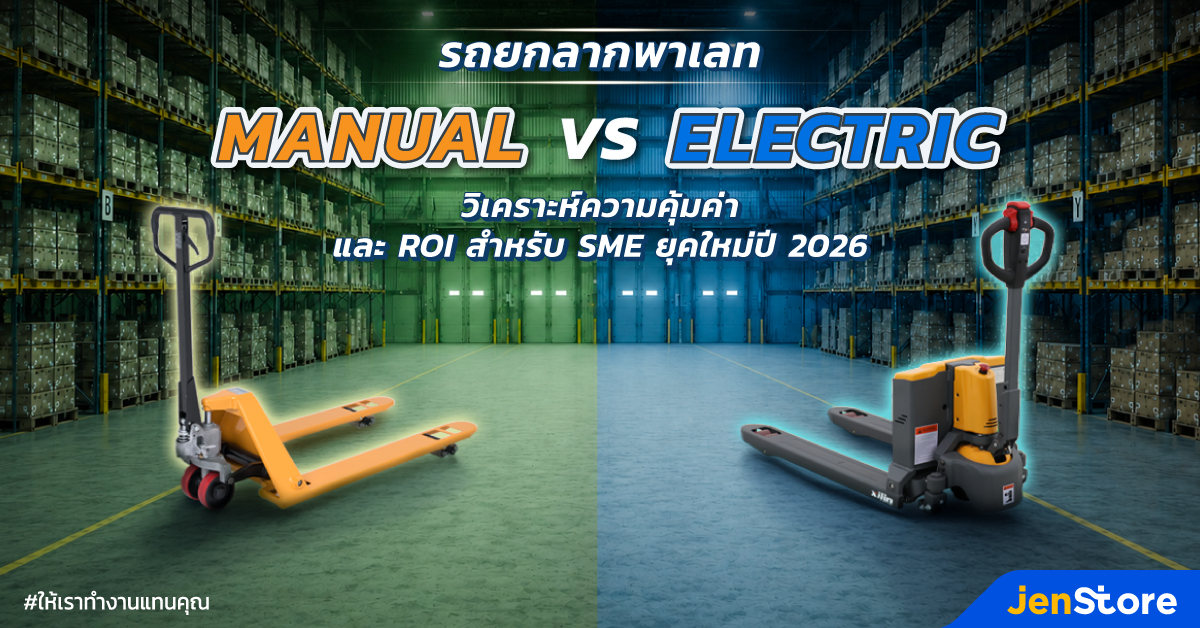
รถยกลากพาเลทแบบ Manual vs ไฟฟ้า: วิเคราะห์ความคุ้มค่าและ ROI สำหรับ SME ยุคใหม่ปี 2026

ในระบบโลจิสติกส์ปี 2026 ประสิทธิภาพของคลังสินค้าไม่ได้วัดกันที่จำนวนพนักงาน แต่อยู่ที่ "ความเร็วต่อหน่วยการเคลื่อนย้าย" และ "ความปลอดภัยเชิงรุก" การเลือกเครื่องจักรทุ่นแรงอย่าง รถลากพาเลท (Pallet Truck) จึงเป็นหัวใจสำคัญที่ส่งผลต่อกำไรสุทธิ บทความนี้จะพาคุณไปเจาะลึกการเปรียบเทียบระหว่าง แฮนด์ลิฟท์ (Hand lift) ระบบไฮดรอลิกมาตรฐาน และ แฮนด์ลิฟท์ไฟฟ้า (Electric pallet truck) นวัตกรรมแบตเตอรี่ลิเธียม เพื่อให้คุณเลือกเครื่องมือที่ตอบโจทย์โครงสร้างต้นทุนและทิศทางธุรกิจได้แม่นยำที่สุด สรุปเลือกรถยกลากพาเลทแบบไหนให้คุ้มค่าที่สุด? สำหรับธุรกิจ SME ที่มีการเคลื่อนย้ายสินค้าต่ำกว่า 15 รอบต่อวัน ในระยะทางสั้นๆ รถลากพาเลทแบบ Manual ยังคงเป็นตัวเลือกที่ชาญฉลาดเนื่องจากไม่มีต้นทุน พลังงานและทนทานสูง แต่หากปริมาณงานสูงกว่า 20 รอบต่อวัน หรือต้องลากสินค้าไกลกว่า 50 เมตร การเปลี่ยนมาใช้ รถลากพาเลทไฟฟ้า คือทางเลือก ที่เหนือกว่าอย่างชัดเจน เพราะสามารถเพิ่มผลิตภาพ (Productivity) ได้มากกว่า 2 เท่า และช่วยลดจำนวนแรงงานลงได้กว่าครึ่ง ส่งผลให้เกิดจุดคุ้มทุน (ROI) จากค่าแรงที่ประหยัดได้ภายในระยะเวลาเพียง 6-10 เดือนเท่านั้น สารบัญเนื้อหาเจาะลึกประเภทรถยกลากพาเลทและการใช้งานลดต้นทุนด้วยการเลือกใช้เทคโนโลยีรถยกลากพาเลทที่ใช่วิเคราะห์ความคุ้มค่าเชิงลึกจากการใช้รถแฮนด์ลิฟท์ไฟฟ้า (ROI Analysis)ระวังกับดัก "ของถูก": ทำไมรถแฮนด์ลิฟท์ราคาต่ำสุดคือต้นทุนที่แพงที่สุดแผนการบำรุงรักษารถยกลากพาเลทและตารางความปลอดภัย (Safety & Maintenance Schedule)คู่มือเลือกใช้รถยกลากพาเลทตามสถานการณ์เฉพาะ (Specific Scenario Guide)จุดเทคนิคก่อนตัดสินใจ: "ล้อ" และ "ขนาดงา" ของรถแฮนด์ลิฟท์ESG: แต้มต่อทางธุรกิจจากการใช้รถยกลากไฟฟ้าที่ SME ไทยไม่ควรมองข้ามFAQ: คำถามที่พบบ่อยเกี่ยวกับรถยกลากพาเลท1. เจาะลึกประเภทรถยกลากพาเลทและการใช้งาน เราสามารถแยกประเภทของรถยกลากพาเลทตามมาตรฐานสากลได้ดังนี้แฮนด์ลิฟท์ (Hand lift) ระบบ Manual: อุปกรณ์ที่ใช้แรงกลจากระบบปั๊มไฮดรอลิกในการยกสูง และใช้แรงดึงจากพนักงานในการเคลื่อนที่ เหมาะสำหรับพื้นที่จำกัดและการใช้งานที่ไม่หนักมากแฮนด์ลิฟท์ไฟฟ้า (Electric pallet truck): ขับเคลื่อนด้วยมอเตอร์ไฟฟ้าทั้งการยกและเดินหน้า-ถอยหลัง ควบคุมด้วยคันโยก (Tiller Head) ช่วยให้พนักงานเพียงคนเดียวจัดการสินค้าหนัก 1.5 - 3 ตัน ได้อย่างง่ายดายรถลากเฉพาะทาง: เช่น รุ่นสแตนเลส (Stainless Steel) สำหรับอุตสาหกรรมอาหาร หรือรถลากพาเลทรุ่นกัลวาไนซ์ (Galvanized) ที่เหมาะสำหรับใช้กับห้องเย็นและงานในพื้นที่ที่มีความชื้น เนื่องจากผลิตจากเหล็กเคลือบกัลวาไนซ์ทำให้ที่มีคุณสมบัติกันสนิม2. ลดต้นทุนด้วยการเลือกใช้เทคโนโลยีรถยกลากพาเลทที่ใช่อุปกรณ์ขนถ่ายยุคใหม่ไม่ได้พัฒนาแค่แรงยก แต่เน้นการลดต้นทุนทั้งระบบ (Total Cost of Ownership) ผ่าน 3 หัวใจหลัก: 2.1 แบตเตอรี่ Lithium-ionรองรับการชาร์จสั้นๆ ระหว่างพัก (Opportunity Charging) โดยไม่ต้องรอให้แบตเตอรี่เต็ม ไม่จำเป็นต้องมีห้องชาร์จเฉพาะทาง และมีอายุการใช้งานยาวนานกว่า แบตเตอรี่ตะกั่ว-กรดหลายเท่าตัว ช่วยลดเวลาหยุดทำงานและลดต้นทุนการบำรุงรักษาในระยะยาว 2.2 ระบบควบคุมที่ใช้ง่ายขึ้นคันบังคับ (Tiller) ถูกออกแบบให้มีน้ำหนักเบา ควบคุมง่าย และบังคับได้แม่นยำแม้ในพื้นที่แคบ ช่วยลดความผิดพลาดของพนักงานใหม่ รวมถึงลดระยะเวลา ในการฝึกอบรมทำให้เริ่มงานได้เร็วและมีประสิทธิภาพมากขึ้น 2.3 แนวคิดลดแรงงาน (Labor Reduction)ช่วยเปลี่ยนงานที่เดิมต้องใช้แรงงาน 2–3 คน ให้เหลือเพียง 1 คนได้อย่างมีประสิทธิภาพ เห็นผลด้านต้นทุนและกำไรได้ชัดเจนในคลังสินค้าที่มีปริมาณงานสูง รวมถึงช่วยให้พนักงานสามารถไปทำหน้าที่อื่นที่สร้างมูลค่าเพิ่มให้ธุรกิจได้มากขึ้น สรุป: เทคโนโลยีใหม่ = ลดคน + ลดเวลา + ลดความเหนื่อยล้า เพื่อผลกำไรสุทธิที่ SME สัมผัสได้จริง 3. วิเคราะห์ความคุ้มค่าเชิงลึกจากการใช้รถแฮนด์ลิฟท์ไฟฟ้า (ROI Analysis)เมื่อเรามองข้าม "ราคาซื้อ" และหันมามองที่ "ต้นทุนการดำเนินงาน (Operating Cost)" เราจะพบสถิติที่น่าสนใจดังนี้: อัตราการคืนทุนผ่านประสิทธิภาพแรงงานการใช้ รถลากพาเลทไฟฟ้า ช่วยให้พนักงาน 1 คน ทำงานได้เท่ากับพนักงาน 2-3 คนที่ใช้ แฮนด์ลิฟท์แบบ Manual ในเวลาที่เท่ากัน เนื่องจากมอเตอร์ไฟฟ้าช่วยตัดความเหนื่อยล้าสะสม ในช่วงบ่ายออกไป ส่งผลให้ความเร็วในการจัดส่ง (Throughput) ของคลังสินค้าคงที่ตลอดทั้งวัน การประหยัดแฝง (Hidden Savings) ลดการบาดเจ็บของพนักงาน: อาการปวดหลังจากการลากของหนักคือสาเหตุหลักของการลางาน การใช้ระบบไฟฟ้าช่วยลดความเสี่ยงนี้ได้เกือบ 100%4. ระวังกับดัก "ของถูก": ทำไมรถแฮนด์ลิฟท์ราคาต่ำสุดคือต้นทุนที่แพงที่สุดหลายธุรกิจเลือกซื้อโดยดูที่ราคาเพียงอย่างเดียว แต่ รถยกลากพาเลท เป็นอุปกรณ์ที่ต้องใช้งานหนัก สินค้าเกรดต่ำมักซ่อนต้นทุนแฝงที่ทำลาย ROI ของคุณในระยะยาว:วัสดุเกรดต่ำและการเสื่อมสภาพไว: ของราคาถูกมักใช้ปั๊มไฮดรอลิกคุณภาพต่ำ ทำให้เกิดการรั่วซึมได้ง่าย ล้อแตกหรือสึกหรอเร็วกว่าปกติ รวมถึงโครงสร้างเหล็กที่บางเกินไป ซึ่งอาจบิดงอเมื่อใช้งานหนัก ส่งผลให้เข็นยากและต้องซ่อมบำรุงบ่อยวิกฤตอะไหล่และบริการหลังการขาย: รถแฮนด์ลิฟท์ที่ไม่มีแบรนด์ชัดเจน มักหาอะไหล่เทียบได้ยาก และไม่มีทีมเซอร์วิสดูแล เมื่อเกิดปัญหาเพียงจุดเดียว รถทั้งคันอาจกลายเป็นขยะอุตสาหกรรมทันที เพราะไม่สามารถซ่อมได้จุดที่ธุรกิจ "เจ็บจริง" จากความประหยัดที่ไม่คุ้มค่า:งานหยุด = เสียรายได้: Downtime เพียง 1 วันในช่วงงานเร่งด่วน อาจสร้างความเสียหายสูงกว่าส่วนต่างราคารถหลายเท่าตัวความปลอดภัยและสินค้า: รถที่ไม่ได้มาตรฐาน มีความเสี่ยงต่อการเกิดอุบัติเหตุล้มทับพนักงาน หรือทำให้สินค้ามูลค่าสูงเสียหายระหว่างเคลื่อนย้าย5. แผนการบำรุงรักษารถยกลากพาเลทและตารางความปลอดภัย (Safety & Maintenance Schedule)เพื่อให้การลงทุนในรถลากพาเลทของคุณมีอายุการใช้งานยาวนานเกิน 5-10 ปี แนะนำให้ปฏิบัติตามแผนการดูแลรักษาดังนี้ ตารางตรวจสอบประจำสัปดาห์ (Weekly Checklist) ระบบล้อ: ตรวจสอบเศษพลาสติกหรือเส้นด้ายที่อาจเข้าไปพันลูกปืนล้อหน้าสัมผัสไฟฟ้า: (สำหรับรุ่นไฟฟ้า) ตรวจสอบขั้วแบตเตอรี่ว่าไม่มีคราบสกปรกหรือรอยไหม้ความสะอาดทั่วไป: เช็ดคราบน้ำมันหรือฝุ่นที่อาจสะสมบริเวณปั๊มไฮดรอลิก6. คู่มือเลือกใช้รถยกลากพาเลทตามสถานการณ์เฉพาะ (Specific Scenario Guide)เพราะหน้างานแต่ละประเภทมีข้อจำกัดในการทำงานที่แตกต่างกัน การเลือกใช้แฮนด์ลิฟท์ที่เหมาะสมเท่านั้นจึงจะทำให้การทำงานเป็นไปอย่างราบรื่น Scenario A: คลังสินค้าห้องเย็น (Cold Storage)คำแนะนำ: ควรเลือกใช้รถยกลากรุ่นกัลวาไนซ์ (Galvanized) หรือรุ่นที่รองรับ Cold Store Specification เพื่อป้องกันการเกิดสนิมจากความชื้น รวมถึงใช้น้ำมันไฮดรอลิกที่ไม่แข็งตัว ในอุณหภูมิติดลบScenario B: งานค้าปลีกหน้าร้าน (Small Retail / Backroom)คำแนะนำ: เหมาะกับรถลากพาเลทไฟฟ้าขนาดกะทัดรัด (Compact Electric) ที่มีรัศมีวงเลี้ยวแคบ เพื่อเพิ่มความคล่องตัวในพื้นที่จัดเก็บที่จำกัดScenario C: การขนส่งข้ามจังหวัดบนรถบรรทุกคำแนะนำ: รถแฮนด์ลิฟท์แบบ Manual ยังมีข้อได้เปรียบเรื่องน้ำหนักตัวรถที่เบา ช่วยลดผลกระทบต่อน้ำหนักบรรทุก (Payload) ของรถขนส่งได้มากกว่า7. จุดเทคนิคก่อนตัดสินใจ: "ล้อ" และ "ขนาดงา" ของรถแฮนด์ลิฟท์การเลือกวัสดุ "ล้อ" ที่ถูกต้องส่งผลโดยตรงต่อความลื่นไหล เสียง และอายุการใช้งานของพื้นผิวคลังสินค้า:ล้อยูรีเทน (PU): ทำงานเงียบ ซับแรงกระแทกได้ดีเยี่ยม และไม่ทำลายพื้นผิว ไม่ทิ้งรอย เหมาะสำหรับพื้น Epoxy คลังสินค้า หรือพื้นที่ใช้งานทั่วไปล้อไนล่อน (Nylon): ให้ความคล่องตัวสูง เข็นลื่นแม้บรรทุกหนัก ทนทานต่อการสึกหรอและสารเคมีได้ดีเยี่ยม เหมาะสำหรับพื้นคอนกรีตเรียบหรือพื้นที่เปียกชื้น ขนาดงา (Fork Size): ควรเลือกให้พอดีกับพาเลทที่ใช้ (หน้าแคบ 520-550 mm สำหรับพื้นที่จำกัด / หน้ากว้างมาตรฐาน 680 mm สำหรับพาเลทมาตรฐานทั่วไป) เพื่อความมั่นคงสูงสุดขณะยกย้าย8. ESG: แต้มต่อทางธุรกิจจากการใช้รถยกลากไฟฟ้าที่ SME ไทยไม่ควรมองข้ามในปี 2026 การเลือกใช้อุปกรณ์ในการทำงานไม่ได้จบที่ ประสิทธิภาพ หรือ กำไร เท่านั้น แต่รวมถึงมาตรฐาน ESG (Environment, Social, and Governance) ซึ่งเป็นใบเบิกทางสำคัญในการร่วมงานกับคู่ค้ารายใหญ่:Environment (สิ่งแวดล้อม): รถยกลากพาเลทไฟฟ้าช่วยลดการปล่อยคาร์บอนและมลพิษทางเสียงในคลังสินค้า สอดคล้องกับนโยบาย Green Logistics และคลังสินค้าสะอาดSocial (พนักงาน): การใช้ระบบไฟฟ้าช่วยลดภาระการใช้แรงกาย (Ergonomics) ลดความเสี่ยงจากการบาดเจ็บเรื้อรัง และเพิ่มความสุขในการทำงานให้กับทรัพยากรที่สำคัญที่สุดขององค์กรGovernance (มาตรฐานองค์กร): การใช้อุปกรณ์ที่ปลอดภัยและทันสมัยสะท้อนถึงการจัดการที่โปร่งใสและเป็นมืออาชีพ ช่วยยกระดับความน่าเชื่อถือเมื่อต้องเสนอโปรเจกต์ให้กับบริษัทข้ามชาติหรือคู่ค้าระดับสากล9. FAQ: คำถามที่พบบ่อยเกี่ยวกับรถยกลากพาเลทQ: รถลากพาเลทไฟฟ้าชาร์จไฟหนึ่งครั้งใช้งานได้นานแค่ไหน? A: รุ่นแบตเตอรี่ลิเธียมมาตรฐานสามารถใช้งานต่อเนื่องได้ 4-6 ชั่วโมง และด้วยการชาร์จในช่วงพักเบรกจะช่วยให้มีพลังงานเพียงพอครอบคลุมทั้งกะงาน Q: แฮนด์ลิฟท์แบบ Manual มีข้อดีอะไรที่ไฟฟ้าสู้ไม่ได้? A: ความเรียบง่ายคือข้อดีที่สุด แฮนด์ลิฟท์ Manual สามารถโดนน้ำได้มากกว่า (ในรุ่นกัลวาไนซ์) ซ่อมบำรุงเองได้เบื้องต้น และพร้อมใช้งานตลอดเวลาโดยไม่ต้องกังวลเรื่องแบตเตอรี่ Q: จะรู้ได้อย่างไรว่าถึงเวลาต้องเปลี่ยนจาก Manual มาเป็นไฟฟ้า? A: หากพนักงานเริ่มบ่นเรื่องอาการปวดหลัง มีสินค้าเสียหายจากการควบคุมรถที่หนักเกินไป หรือธุรกิจมียอดคำสั่งซื้อเพิ่มขึ้นจนการเคลื่อนย้ายแบบเดิมกลายเป็น "คอขวด" ของการผลิต นั่นคือสัญญาณที่ชัดเจนที่สุด บทสรุป: การตัดสินใจเชิงกลยุทธ์เพื่ออนาคตไม่ว่าคุณจะเลือก รถยกลากพาเลท ระบบ Manual แบบคลาสสิกที่ประหยัด หรือเลือกรถลากพาเลทไฟฟ้า ที่เน้นประสิทธิภาพและนวัตกรรม สิ่งสำคัญที่สุดคือการเลือกอุปกรณ์ที่มีมาตรฐานความปลอดภัยระดับสากลและการสนับสนุนหลังการขายที่มั่นใจได้ที่ Jenstore.com เรามุ่งมั่นนำเสนอเฉพาะอุปกรณ์ขนถ่ายสินค้าที่ผ่านการทดสอบคุณภาพอย่างเข้มงวด เพื่อให้มั่นใจว่าทุกการลงทุนของ SME ไทยในปี 2026 จะนำมาซึ่งการเติบโตที่ยั่งยืนและผลตอบแทนที่คุ้มค่าที่สุด ต้องการคำปรึกษาเรื่องการวางระบบคลังสินค้าหรือเลือกแฮนด์ลิฟท์ที่เหมาะกับงานของคุณ?เยี่ยมชมสินค้าจริงและรับคำปรึกษาจากวิศวกรผู้เชี่ยวชาญได้ที่ www.jenstore.com แหล่งรวมอุปกรณ์เคลื่อนย้ายสินค้าที่ครบวงจรที่สุดในประเทศไทย

2026-05-25
รีวิวเครื่องดูดฝุ่น ยี่ห้อไหนดี มีสายหรือไร้สาย แบบไหนตอบโจทย์กว่า

การจะซื้อเครื่องดูดฝุ่นสักเครื่องอาจไม่ได้ง่ายเหมือนอุปกรณ์ทำความสะอาดชิ้นอื่น เพราะนี่คือเครื่องใช้ไฟฟ้าที่ต้องใช้งานหนักและอยู่กับเราไปอีกหลายปี แถมยังมีราคาสูงกว่าเครื่องใช้ไฟฟ้าหลายๆ ชิ้น นั่นอาจทำให้คุณตัดสินใจไม่ถูกว่าจะเลือกเครื่องดูดฝุ่น ยี่ห้อไหนดี วันนี้ Jenstore จะมาแนะนำวิธีเช็กรีวิวเครื่องดูดฝุ่น พร้อมแนะนำยี่ห้อที่น่าสนใจในปี 2026ก่อนอ่านรีวิวเครื่องดูดฝุ่น เพื่อตัดสินใจซื้อ ควรดูอะไรบ้าง?เวลาจะเลือกซื้อเครื่องดูดฝุ่นสักเครื่อง หลายคนมักจะเริ่มต้นด้วยการอ่านหรือดูรีวิวเครื่องดูดฝุ่น ที่ดูสวยงามหรือมียอดวิวเยอะๆ แต่ในความเป็นจริงแล้ว สิ่งที่ดีที่สุดในรีวิวของคนอื่น อาจเป็นสิ่งที่แย่ที่สุด สำหรับการใช้งานจริงของคุณก็ได้ ต่อให้เครื่องไร้สายดีไซน์สวยที่บล็อกเกอร์แนะนำว่าดี แต่อาจจะแบตเตอรี่หมดก่อนที่คุณจะทำความสะอาดบ้านหลังใหญ่เสร็จ หรือเครื่องที่แรงดูดมหาศาลแต่อาจจะเสียงดังจนลูกน้อยหรือสัตว์เลี้ยงของคุณขวัญเสีย ดังนั้นก่อนจะปักใจเชื่อรีวิว เราอยากให้คุณกลับมาสำรวจ 8 ปัจจัยพื้นฐานที่จะบอกได้ว่า เครื่องดูดฝุ่นเครื่องนั้นเหมาะกับบ้านของคุณจริงๆ หรือเปล่า1. พลังดูดอย่าหลงกลตัวเลข Watt ที่แปะหราอยู่บนกล่อง เพราะนั่นคือกำลังไฟที่เครื่องใช้ ไม่ใช่แรงที่เครื่องดูด สิ่งที่คุณจะต้องมองหานั่นคือค่า AW (Air Watts) หรือ Pa (Pascal) ยิ่งเลขสูงยิ่งแปลว่าเครื่องมีแรงดูดฝุ่นสูง ยิ่งถ้าคุณมีพรมหรือเลี้ยงสัตว์ แรงดูดจะต้องถึง ไม่อย่างนั้นฝุ่นจะยังฝังลึกอยู่เหมือนเดิม การเลือกเครื่องที่ปรับระดับแรงดูดได้หลายระดับจะช่วยให้คุณสลับไปใช้โหมดเบาเพื่อดูดม่านหรือโซฟาได้โดยไม่ทำให้เนื้อผ้าเสียหาย2. ระยะเวลาการใช้งานและแบตเตอรี่นี่คือจุดตายของเครื่องดูดฝุ่นไร้สาย สเปกที่เขียนว่าใช้งานได้ 60 นาที ส่วนใหญ่คือโหมดประหยัดพลังงานที่ดูดได้แค่เส้นผมหรือฝุ่นเบาๆ เท่านั้น แต่พอคุณเปิดโหมดแรงสุดเพื่อดูดฝุ่นหนาๆ แบตเตอรี่อาจร่วงไปเหลือแค่ 5-10 นาที การเลือกเครื่องที่มีแบตเตอรี่แบบถอดสลับได้จะช่วยแก้ปัญหานี้ได้มาก เพราะถ้าแบตก้อนแรกหมด คุณก็แค่เสียบก้อนที่สองแล้วดูดฝุ่นต่อได้ทันที ไม่ต้องรอชาร์จเป็นชั่วโมง3. ระบบกรองฝุ่นระบบกรองถือเป็นตัวชี้วัดว่าบ้านจะสะอาดจริงหรือแค่ย้ายฝุ่นไปไว้ที่อื่นเฉยๆ เครื่องราคาถูกส่วนใหญ่จะดูดฝุ่นเข้าทางข้างหน้าแล้วพ่นฝุ่น PM 2.5 ออกทางข้างหลัง สิ่งที่ต้องมีคือระบบ HEPA Filter ที่ต้องเป็นระบบปิดสนิทเพื่อดักจับอนุภาคเล็กๆ และสารก่อภูมิแพ้ไม่ให้เล็ดลอดเข้ามาสู่ปอดของคุณในขณะที่กำลังทำความสะอาด และเรื่องนี้เป็นสิ่งที่คุณต้องใส่ใจเป็นพิเศษหากคนในบ้านเป็นภูมิแพ้4. น้ำหนักและการออกแบบตามหลักสรีรศาสตร์ตอนที่คุณไปลองเครื่องที่ร้านประมาณ 1-2 นาที คุณอาจจะไม่รู้สึกอะไรมาก แต่ถ้าต้องแบกเครื่องดูดฝุ่นน้ำหนัก 3 กิโลกรัมแกว่งไปมาทั่วบ้านนานเกือบ 20 นาที เรากล้าการันตีว่าอาการปวดข้อมือถามหาแน่นอน ดังนั้นให้ลองเช็กจุดศูนย์ถ่วงก่อนว่าน้ำหนักไปลงที่ส่วนไหน ถ้ามอเตอร์หนัก แถมยังอยู่ตรงมือถืออีก คุณจะล้าเร็วมาก ดังนั้นเครื่องที่ดีควรจะเบาเวลาใช้งาน และด้ามจับต้องรับกับสรีระ ไม่ต้องก้มหรือเอื้อมจนปวดหลังครับ5. ประเภทของหัวแปรงที่แถมมาให้ถ้าบ้านเป็นพื้นไม้หรือกระเบื้อง คุณควรใช้หัวแปรงลูกกลิ้งนุ่ม เพื่อไม่ให้พื้นเป็นรอยและเก็บกวาดฝุ่นได้อย่างละเอียด แต่ถ้าเป็นพรม คุณต้องใช้หัวแปรงแบบมอเตอร์สั่นแรงๆ เพื่อตีดึงฝุ่นออกมา ที่สำคัญที่สุดสำหรับคนยุคนี้คือเทคโนโลยี Anti-Tangle ซึ่งเป็นหัวแปรงที่ถูกออกแบบมาดูดเส้นผมได้โดยไม่ทำให้เส้นผมพันติดแกนแปรง ช่วยให้คุณไม่ต้องเสียเวลามานั่งแกะผมออกบ่อยๆ แถมยังช่วยให้แรงดูดของเครื่องทำงานได้เต็มประสิทธิภาพตลอดเวลาอีกด้วย6. ความจุของถังเก็บฝุ่นและการทำความสะอาดอย่าลืมเช็กให้ดีก่อนว่าถังเก็บฝุ่นมีขนาดกว้างพอไหม ระบบการเทฝุ่นเป็นอย่างไร ระบบที่ดีที่สุดคือแบบกดทีเดียวจบ โดยที่มือเราไม่ต้องไปสัมผัสสิ่งสกปรกหรือเอามือไปดึงกระจุกฝุ่นออกมาเอง รวมถึงฟิลเตอร์และถังเก็บฝุ่นจะต้องถอดออกมาล้างน้ำได้ทุกชิ้น เพื่อป้องกันเชื้อโรคและกลิ่นอับสะสมภายในเครื่อง7. ระดับเสียงขณะทำงานเครื่องที่เสียงดังเหมือนเครื่องบินเจ็ทออกตัวอาจจะดูทรงพลังสำหรับใครหลายคน แต่ถ้าใช้งานจริงๆ แล้วมันคือความทรมานทั้งคนใช้และเพื่อนบ้าน โดยเฉพาะคนที่อาศัยอยู่คอนโดหรือมีสัตว์เลี้ยงขี้ตกใจ ระดับเสียงมาตรฐานที่พอรับได้ควรอยู่ที่ประมาณ 70-75 เดซิเบล หากยี่ห้อไหนมีระบบ Acoustic Engineering ที่ช่วยซับเสียงมอเตอร์ให้เบาลง ช่วยให้การทำความสะอาดบ้านเป็นอะไรที่เพลินมาก8. ศูนย์บริการและการรับประกันข้อนี้สำคัญมากในระยะยาว เพราะเครื่องดูดฝุ่นเป็นเครื่องใช้ไฟฟ้าที่ต้องใช้งานหนัก จึงอาจเสื่อมตามอายุการใช้งานอยู่แล้ว โดยเฉพาะแบตเตอรี่และฟิลเตอร์ ก่อนซื้ออย่าลืมเช็กว่ายี่ห้อที่สนใจมีศูนย์บริการอยู่ที่ไทยไหม หาซื้ออะไหล่ง่ายหรือเปล่า มีอะไหล่สิ้นเปลืองวางขายตามร้านค้าทั่วไปไหม เพราะถ้าไม่มีอะไหล่หาเปลี่ยนง่ายแล้ว เครื่องดูดฝุ่นราคาหลักหมื่นอาจกลายเป็นที่ทับกระดาษเลยก็ได้เครื่องดูดฝุ่น มีกี่แบบ ซื้อแบบไหนดี?การซื้อเครื่องดูดฝุ่นไม่ใช่แค่เรื่องของประสิทธิภาพเท่านั้น แต่รวมถึงการใช้งานตามความเหมาะสมของหน้างาน หลายคนอาจสงสัยว่าจะซื้อแบบแห้งอย่างเดียวดีไหม ซื้อแบบไร้สายตอบโจทย์กว่าไหม หรือควรขยับไปใช้หุ่นยนต์ดูดฝุ่นให้จบเรื่องไปเลยดีกว่า อย่างแรกคุณจะต้องรู้ก่อนว่าแต่ละประเภทถูกออกแบบมาเพื่อแก้ปัญหาที่ต่างกัน ในปัจจุบันแบ่งออกเป็น 4 ประเภท ได้แก่1. เครื่องดูดฝุ่นไร้สายเป็นประเภทเครื่องดูดฝุ่นที่ยอดฮิตที่สุดในยุคนี้ เนื่องจากไม่มีสายไฟมาเกะกะ คุณจึงยกไปดูดฝุ่นได้ทุกที่ ตั้งแต่พื้นบ้าน ซอกตู้ ไปจนถึงในรถยนต์ เหมาะสำหรับคนที่อาศัยอยู่ในคอนโดหรือบ้านเดี่ยวที่ต้องการทำความสะอาดแบบรวดเร็วทันใจ แต่มีข้อควรระวังคือเรื่องของระยะเวลาแบตเตอรี่ที่อาจใช้งานได้จำกัด และหากเลือกยี่ห้อที่มีแรงดูดน้อยไป ก็อาจจัดการฝุ่นในพรมได้ไม่สะอาดเท่าที่ควรเหมาะสำหรับ: คนที่อาศัยอยู่ในคอนโดหรือบ้านเดี่ยวขนาดเล็กที่เน้นความคล่องตัว ชอบทำความสะอาดแบบรวดเร็วทันใจ หรือใช้เป็นเครื่องสำรองสำหรับดูดฝุ่นบนเฟอร์นิเจอร์และในรถ2. เครื่องดูดฝุ่นแบบมีสายหากบ้านของคุณมีพื้นที่กว้างมากหรือมีพรมหนาอยู่หลายจุด เครื่องแบบมีสายคือคำตอบที่เหมาะที่สุด เพราะคุณสามารถเปิดเครื่องทิ้งไว้ได้ยาวๆ โดยไม่ต้องกังวลว่าแบตเตอรี่จะหมดกลางคัน และเครื่องประเภทนี้ส่วนใหญ่จะมีพลังดูดที่เสถียรกว่าเครื่องที่มีราคาย่อมเยา ข้อเสียเพียงอย่างเดียวคือความยุ่งยากในการลากสายไฟและการหาปลั๊กพ่วงเสียบเวลาย้ายไปทำความสะอาดห้องอื่นเหมาะสำหรับ: ครอบครัวใหญ่ที่มีบ้านหลายชั้น หรือบ้านที่ปูพรมเยอะๆ ซึ่งต้องการพลังดูดที่แรงและต่อเนื่องเพื่อทำความสะอาดแบบชุดใหญ่3. หุ่นยนต์ดูดฝุ่นเหมาะสำหรับสายขี้เกียจหรือคนที่ไม่ค่อยมีเวลาทำความสะอาดบ้านเอง หุ่นยนต์ดูดฝุ่นจะคอยวิ่งเก็บกวาดฝุ่นให้คุณทุกวันตามตารางเวลาที่ตั้งไว้ ช่วยลดปริมาณฝุ่นสะสมได้ดีมาก แต่ต้องเข้าใจว่ามันไม่ได้ถูกออกแบบมาเพื่อทำความสะอาดแบบบิ๊กคลีนนิ่ง เพราะยังมีบางจุดที่มันไม่สามารถเข้าถึงได้ เช่น ซอกมุมลึกๆ หรือบนเฟอร์นิเจอร์ ดังนั้นคุณจะต้องมีเครื่องดูดฝุ่นสำรองไว้ใช้งานควบคู่กันเหมาะสำหรับ: สายขี้เกียจหรือคนวัยทำงานที่ไม่ค่อยมีเวลาทำความสะอาดบ้านเอง รวมถึงบ้านที่เลี้ยงสัตว์ที่อาจมีเส้นขนร่วงตามพื้นตลอดทั้งวัน4. เครื่องดูดฝุ่นแห้งและเปียกถือเป็นตัวเลือกที่คุ้มค่าสำหรับบ้านที่มีเด็กเล็กหรือสัตว์เลี้ยง เพราะเครื่องประเภทนี้สามารถจัดการได้ทั้งฝุ่นผงธรรมดาและเศษอาหารหรือน้ำที่หกเลอะเทอะพื้น บางรุ่นถูกพัฒนาเป็นเครื่องถูพื้นอัจฉริยะที่ดูดและถูไปในตัวเดียว จึงช่วยลดขั้นตอนการทำงานบ้านให้น้อยลง แต่เครื่องประเภทนี้มักมีขนาดใหญ่และมีน้ำหนักค่อนข้างมาก แถมยังต้องล้างถังเก็บน้ำเสียบ่อยๆ เพื่อป้องกันกลิ่นอับอีกด้วยเหมาะสำหรับ: บ้านที่มีเด็กเล็กหรือสัตว์เลี้ยงที่มักทำอาหารและน้ำหกเลอะเทอะเป็นประจำ รวมถึงร้านอาหารหรือคาเฟ่ที่ต้องการเครื่องเดียวจบทั้งงานดูดและงานเช็ดซื้อเครื่องดูดฝุ่น ยี่ห้อไหนดี?หากคุณกำลังมองหาตัวช่วยทำความสะอาดที่ทรงพลังและคุ้มกับเงินที่เสียไป แต่มั่นใจไม่ได้ว่าจะซื้อ เครื่องดูดฝุ่น ยี่ห้อไหนดี วันนี้เราขอแนะนำเครื่องดูดฝุ่น 5 รุ่นยอดฮิตที่มีจุดเด่นแตกต่างกันไป ตั้งแต่รุ่นที่เน้นความประหยัดใช้งานง่ายในบ้าน ไปจนถึงรุ่นถังสแตนเลสพันธุ์อึดที่รองรับงานหนักระดับอุตสาหกรรม เพื่อให้คุณเปรียบเทียบสเปกและเลือกตัวที่ใช่ที่สุดสำหรับหน้างานของคุณ1. เครื่องดูดฝุ่นน้ำ-แห้ง 18 ลิตร AURA 18สำหรับผู้ที่ไม่เคยใช้เครื่องดูดฝุ่นน้ำ-แห้งมาก่อน หรือต้องการเครื่องดูดฝุ่นน้ำ-แห้งในราคาสุดคุ้ม เครื่องดูดฝุ่นน้ำ-แห้ง 18 ลิตร AURA 18 จากแบรนด์ POLO ที่มาพร้อมฟังก์ชันครบเครื่องเกินตัว ด้วยตัวถังพลาสติกน้ำหนักเบาเคลื่อนย้ายสะดวก แต่ทรงพลังด้วยมอเตอร์ 1200W ที่ดูดได้ทั้งฝุ่นแห้งและคราบน้ำ จุดเด่นสำคัญคือไส้กรอง HEPA ที่มีความละเอียดสูงถึง 0.3 µm ช่วยดักจับฝุ่นละอองขนาดเล็กได้อย่างมั่นใจ เหมาะเป็นเครื่องดูดฝุ่นประจำบ้านที่เน้นความอเนกประสงค์ในราคาสบายกระเป๋า2. เครื่องดูดฝุ่นน้ำ-แห้ง 30 ลิตร AURA-30Nขยับขึ้นมาอีกนิดสำหรับคนที่ต้องการความจุสะใจกับเครื่องดูดฝุ่นน้ำ-แห้ง 30 ลิตร AURA-30N ด้วยถังสแตนเลสขนาด 30 ลิตร มาพร้อมระบบ Self Cleaning System ปุ่มเคาะฝุ่นอัจฉริยะที่ช่วยทำความสะอาดไส้กรองได้โดยไม่ต้องถอดถุงเก็บฝุ่นออกมาบ่อยๆ รวมถึงไส้กรอง HEPA และอุปกรณ์หัวดูดมาตรฐานแบบครบชุด ถือเป็นรุ่นที่ตอบโจทย์ทั้งงานในบ้านขนาดใหญ่หรืองานกวาดล้างในพื้นที่เวิร์กช็อปที่ต้องการความทนทานและไม่ต้องเทฝุ่นทิ้งบ่อยๆ3. เครื่องดูดฝุ่นน้ำ-แห้ง ถัง 28 ลิตร NT 30/1 Me Classic*CNหากคุณต้องการยกระดับการใช้งาน เครื่องดูดฝุ่นน้ำ-แห้ง ถัง 28 ลิตร NT 30/1 Me Classic*CN จาก KARCHER ถือเป็นหนึ่งตัวเลือกในราคาที่เอื้อมถึงได้ ตัวเครื่องเน้นโครงสร้างที่แข็งแรงด้วยถังสแตนเลสและมีกันกระแทกรอบคัน มาพร้อมนวัตกรรมตัวกรองตลับแบบใหม่ที่ช่วยลดต้นทุนการบำรุงรักษาในระยะยาว มีอัตราการไหลของลมสูงถึง 59 ลิตรต่อวินาที ทำให้ดูดทั้งฝุ่นขนาดกลาง ฝุ่นหยาบ และของเหลวได้อย่างต่อเนื่องโดยไม่ต้องใช้ถุงกรองเลย เหมาะสำหรับงานบริการและงานช่างที่ต้องการเครื่องดูดฝุ่นสำหรับทุกสถานการณ์เคล็ด(ไม่)ลับ: หากต้องทำความสะอาดภายนอกอาคารร่วมด้วย การใช้คู่กับเครื่องฉีดน้ำแรงดันสูงจากแบรนด์เดียวกันจะช่วยประหยัดเวลาได้มหาศาล4. เครื่องดูดฝุ่นน้ำ-แห้ง 17 ลิตร WD-3 SVเครื่องดูดฝุ่นน้ำ-แห้ง 17 ลิตร WD-3 SV เป็นหนึ่งในรุ่นยอดนิยมที่สุดจากเยอรมนี โดดเด่นด้วยดีไซน์ถังสแตนเลสสวยงามและระบบล็อค Pull & Push ที่ใช้งานง่ายสุดๆ จุดเด่นคือไส้กรองตลับชิ้นเดียวที่ออกแบบมาให้ดูดได้ทั้งแบบเปียกและแห้งโดยไม่ต้องเสียเวลาเปลี่ยนไส้กรองสลับไปมา แถมยังมีฟังก์ชันเป่าลมในตัวสำหรับไล่ฝุ่นในจุดที่เข้าถึงยาก เป็นเครื่องดูดฝุ่นเกรดอุตสาหกรรมที่ขนาดกะทัดรัดแต่ประสิทธิภาพสูงลิบในราคาที่ไม่แพงเกินไป5. เครื่องดูดฝุ่นแห้ง 8 ลิตร T8/1CLASSICและสำหรับใครที่ยังลังเลว่าจะซื้อเครื่องดูดฝุ่น ยี่ห้อไหนดี เราขอแนะนำเครื่องสุดท้ายอย่าง เครื่องดูดฝุ่นแห้ง 8 ลิตร T8/1CLASSICที่ขึ้นชื่อเรื่องความเงียบและเนี้ยบได้อย่างลงตัว เหมาะสำหรับงานทำความสะอาดภายในอาคารโดยเฉพาะ ไม่ว่าจะเป็นโรงแรม ออฟฟิศ บ้าน หรือคอนโดที่ต้องการทำความสะอาดโดยไม่ส่งเสียงรบกวนใคร แม้จะเน้นดูดฝุ่นแห้งเพียงอย่างเดียวแต่มาพร้อมแรงดูดมหาศาลถึง 285 mBar และมอเตอร์ 1600W ที่ทำงานได้เงียบสุดๆ เพียง 69 dB รุ่นนี้ถูกออกแบบมาเพื่ออำนวยความสะดวกให้กับผู้ใช้งานเป็นอย่างมากด้วยสวิตช์เท้าและน้ำหนักที่เบาเพียง 5 กิโลกรัมสุดท้ายนี้ต่อให้คุณจะเลือกเครื่องดูดฝุ่นได้ดีแค่ไหน แต่หากต้องการให้หน้างานสะอาดขึ้น การรู้จักเลือกใช้อุปกรณ์อื่นควบคู่กันไปด้วย เช่น เครื่องขัดพื้น หรือ เครื่องฉีดน้ำแรงดันสูง ก็จะช่วยให้การทำความสะอาดเป็นเรื่องง่ายขึ้นมาก นอกจากจะไม่ต้องออกแรงเหนื่อยแล้ว ยังเอ็นจอยกับการดูแลพื้นที่ของคุณให้สะอาดเป๊ะกว่าเดิมด้วยFAQ คำถามที่พบบ่อย1. เครื่องดูดฝุ่นแบบมีสาย กับไร้สาย แบบไหนแรงกว่ากัน?หากวัดกันที่ความเสถียรและพละกำลัง เครื่องดูดฝุ่นแบบมีสายส่วนใหญ่จะให้แรงดูดที่สม่ำเสมอกว่าในระยะยาว เนื่องจากได้รับกระแสไฟโดยตรงจากปลั๊กไฟบ้าน ทำให้มอเตอร์ทำงานเต็มสูบตลอดเวลาโดยไม่ต้องพะวงเรื่องแบตเตอรี่จะอ่อนลง ต่างจากแบบไร้สายที่แรงดูดอาจจะดรอปลงเมื่อแบตเตอรี่ใกล้หมด แต่ในปัจจุบันเครื่องดูดฝุ่นไร้สายระดับพรีเมียมได้พัฒนาพลังดูดให้ใกล้เคียงแบบมีสายมากขึ้น แต่คุณก็ต้องแลกมาด้วยราคาทุนที่สูงขึ้นหลายเท่าตัวเพื่อให้ได้ประสิทธิภาพที่เท่ากัน2. เครื่องดูดฝุ่นไร้สาย ยี่ห้อไหนดี?การเลือกซื้อเครื่องดูดฝุ่นไร้สายให้คุ้มค่าไม่ได้ดูเพียงแค่ดีไซน์หรือแรงดูดที่ระบุบนกล่อง แต่เป็นการเลือกยี่ห้อที่น่าเชื่อถือและมีบริการหลังการขายที่ชัดเจน เนื่องจากเครื่องไร้สายมีอุปกรณ์ที่เสื่อมสภาพตามการใช้งาน เช่น แบตเตอรี่หรือฟิลเตอร์กรองฝุ่น ดังนั้นยี่ห้อที่ดีควรมีศูนย์บริการในไทยที่ติดต่อได้ง่าย มีอะไหล่สำรองพร้อมเปลี่ยนโดยไม่ต้องรอสินค้านำเข้านานเกินไป รวมถึงมีการรับประกันมอเตอร์และแบตเตอรี่ที่ยาวนานด้วย3. เลือกเครื่องดูดฝุ่นประเภทใดถึงจะตอบโจทย์ที่สุด?การเลือกให้ตอบโจทย์หน้างานต้องดูที่พื้นที่และระยะเวลาเป็นหลัก หากคุณอยู่คอนโดหรือหอพักที่มีพื้นที่ไม่กว้างนัก เครื่องดูดฝุ่นไร้สายคือคำตอบที่สมบูรณ์แบบเพราะจัดเก็บง่ายและคล่องตัวสูง แต่ถ้าคุณต้องดูแลบ้านเดี่ยวหลายชั้นหรือบ้านที่มีพรมเยอะ เครื่องดูดฝุ่นแบบมีสายจะตอบโจทย์กว่ามาก ช่วยให้คุณทำความสะอาดต่อเนื่องได้ทุกห้องโดยไม่ต้องหยุดรอชาร์จแบตเตอรี่ แถมยังมีถังเก็บฝุ่นขนาดใหญ่กว่า ไม่ต้องเสียเวลาเดินไปเทฝุ่นทิ้งบ่อยๆ

2026-05-19
รีวิวเครื่องขัดพื้น ยี่ห้อไหนดี มีวิธีเลือกอย่างไรถึงจะเหมาะกับคุณ

รีวิวเครื่องขัดพื้น ยี่ห้อไหนดี มีวิธีเลือกอย่างไรถึงจะเหมาะกับคุณหากคุณเบื่อกับการขัดพื้นแบบเดิมที่ทั้งเหนื่อยและเสียเวลาสุดๆ จนเริ่มมองหาตัวช่วยทุ่นแรงอย่างเครื่องขัดพื้น คุณอาจต้องเริ่มทำการบ้านสักหน่อยว่า เครื่องขัดพื้น ยี่ห้อไหนดี แต่หากคุณไม่รู้ว่าต้องเริ่มจากตรงไหน มีเครื่องรุ่นไหน ยี่ห้อไหนน่าสนใจบ้าง วันนี้ Jenstore มีคำแนะนำดีๆ มาฝาก รับรองว่าอ่านจบแล้วได้เครื่องที่ตรงใจคุณแน่นอน มือใหม่ ซื้อเครื่องขัดพื้น ยี่ห้อไหนดี?หากคุณเป็นมือใหม่ ไม่เคยซื้อเครื่องขัดพื้นมาก่อน แล้วก็ไม่รู้ว่าจะเลือกแบรนด์ไหนดี วันนี้เรามีเครื่องขัดพื้นที่น่าสนใจทั้ง 4 รุ่น จากแบรนด์ชั้นนำอย่าง KARCHER และ HANGCHA มาแนะนำชื่อแบรนด์สเปคราคาเครื่องขัดพื้นแบบเดินตามเฉพาะจุด BDS43/150C CLASSKARCHERโครงสร้างแข็งแรงทนทาน เหมาะกับงานหนัก ใช้งานขัดเฉพาะจุดหรือทางเดิน แรงกดสม่ำเสมอ รองรับการขัดแห้ง ไม่มีระบบดูดกลับ ต้องใช้ร่วมกับอุปกรณ์เก็บน้ำ35,000เครื่องขัดพื้นแบบเดินตาม พร้อมระบบดูดกลับอัตโนมัติ BR 30/4 C AdvKARCHERขัดและดูดน้ำได้ในตัว พื้นแห้งไว ประหยัดเวลา เหมาะกับพื้นเรียบ เช่น กระเบื้อง/หินขัด ถังน้ำถอดล้างง่าย ไม่รองรับการดูดแห้ง35,000เครื่องขัดพื้นแบบเดินตาม BD50/50 CBP-CNKARCHERถังน้ำขนาดใหญ่ ใช้งานต่อเนื่องนาน แบตเตอรี่ชาร์จ 8 ชม. ใช้งาน 2-3 ชม. เปลี่ยนแปรงง่าย เหมาะกับพื้นที่ใหญ่ เช่น พื้นอีพ็อกซี่ มีแผ่นขัดหลายสีให้เลือกใช้135,500เครื่องขัดพื้นแบบเดินตาม HANGCHA JSXD60-XQ6Z-IHANGCHAมาพร้อมแผ่นขัด 3M (แดง/ขาว/ดำ) ใช้งานได้หลากหลาย ควบคุมง่าย เคลื่อนที่ลื่นไหล รองรับทั้งขัดล้าง ขัดเงา และลอกแว็กซ์99,0001. เครื่องขัดพื้น แบบเดินตามเฉพาะจุด BDS43/150C-CLASS รุ่น BDS43/150C CLASS (แบรนด์ KARCHER)สำหรับผู้ที่ต้องการความคล่องตัวสูง เครื่องขัดพื้นแบบเดินตามเฉพาะจุด BDS43/150C-CLASS รุ่น BDS43/150C CLASS รุ่นนี้โดดเด่นด้วยโครงสร้างที่แข็งแรงทนทานเป็นพิเศษ การออกแบบเน้นให้อายุการใช้งานยาวนานแม้จะผ่านงานหนักอย่างต่อเนื่อง เหมาะกับขัดทำความสะอาดเฉพาะจุดหรือพื้นทางเดินที่ต้องการแรงกดขัดสม่ำเสมอ เพื่อให้พื้นผิวกลับมาสะอาดหมดจดในด้านการใช้งาน เครื่องรุ่นนี้ถูกออกแบบมาเพื่อการขัดแบบมาตรฐานและใช้ขัดแห้งเพื่อปรับสภาพพื้นผิวได้ดี อย่างไรก็ตาม ตัวเครื่องไม่มีระบบดูดกลับในตัว จึงเหมาะสำหรับใช้ร่วมกับอุปกรณ์เก็บน้ำหรือใช้ในพื้นที่ที่มีระบบระบายน้ำเตรียมพร้อมไว้แล้ว ถือเป็นตัวเลือกที่คุ้มค่าสำหรับงานขัดพื้นทั่วไปที่เน้นความถึกทนเป็นหลัก2. เครื่องขัดพื้นแบบเดินตาม พร้อมระบบดูดกลับอัตโนมัติ BR 30/4 C Adv (แบรนด์ KARCHER)หากความสะดวกคือสิ่งที่คุณมองหา เครื่องขัดพื้นแบบเดินตาม พร้อมระบบดูดกลับอัตโนมัติ BR 30/4 C Adv คือคำตอบที่ผสานการขัดและการดูดเข้าด้วยกัน ตัวเครื่องมีโครงสร้างที่เน้นความทนทานตามมาตรฐาน KARCHER สามารถขัดทำความสะอาดและดูดน้ำกลับได้ทันที ทำให้พื้นแห้งไวและใช้งานพื้นที่ได้ต่อได้รวดเร็วสุดๆ ช่วยให้ประหยัดเวลาในการทำงานได้อย่างมหาศาลส่วนลักษณะการทำงานจะคล้ายๆ กับเครื่องดูดฝุ่นที่มาพร้อมแปรงขัดทรงประสิทธิภาพ เหมาะอย่างยิ่งสำหรับพื้นผิวที่เรียบ เช่น พื้นกระเบื้องหรือพื้นหินขัด (รุ่นนี้ไม่รองรับการดูดแห้ง) นอกจากนี้ยังมีจุดเด่นที่ถังบรรจุน้ำสามารถถอดออกง่าย ช่วยให้การเติมน้ำและทำความสะอาดตัวเครื่องหลังใช้งานเป็นเรื่องที่สะดวกและถูกสุขลักษณะ3. เครื่องขัดพื้นแบบเดินตาม BD50/50 CBP-CN (แบรนด์ KARCHER)เครื่องขัดพื้นแบบเดินตาม BD50/50 CBP-CN เครื่องนี้คือรุ่นเรือธงสำหรับงานพื้นที่ขนาดใหญ่ที่ต้องการประสิทธิภาพสูงสุด ด้วยถังบรรจุน้ำขนาดใหญ่พิเศษที่ช่วยให้คุณใช้งานต่อเนื่องยาวๆ ได้โดยไม่ต้องหยุดพักเติมน้ำบ่อย ๆ โครงสร้างเน้นความสมบุกสมบัน อายุใช้งานยาวนาน มาพร้อมระบบการเปลี่ยนแปรงที่ง่ายดายโดยไม่ต้องพึ่งพาเครื่องมือ จึงช่วยลด Downtime ในการทำงานได้ดีมากๆในส่วนของพลังงาน รุ่นนี้ใช้แบตเตอรี่ที่ชาร์จไฟบ้าน (220V) นาน 8 ชั่วโมง แต่ให้ชั่วโมงการทำงานต่อเนื่องถึง 2-3 ชั่วโมง เหมาะสำหรับขัดพื้นอีพ็อกซี่ให้สะอาดหมดจด ตัวเครื่องมาพร้อมอุปกรณ์ครบชุดรวมถึงแผ่นขัดหลายเฉดสี (แดง/ขาว/ดำ) เพื่อการใช้งานที่หลากหลาย ข้อควรระวังคือตัวจอจะไม่แสดงระดับแบตเตอรี่ในขณะใช้งาน แต่จะแสดงเลขในระหว่างชาร์จ และควรเลี่ยงการใช้จนแบตหมดเกลี้ยงเพื่อรักษาอายุการใช้งานแบตเตอรี่ให้ยาวนานที่สุด4. เครื่องขัดพื้นแบบเดินตาม - HANGCHA JSXD60-XQ6Z-I (แบรนด์ HANGCHA)หากถามว่ารุ่นนี้เหมาะกับใคร เครื่องขัดพื้นแบบเดินตาม HANGCHA JSXD60-XQ6Z-I คือคำตอบสำหรับผู้ที่ต้องการโซลูชันแบบ All-in-one เพราะทางแบรนด์มักมาพร้อมโปรโมชัน ฟรี! แผ่นขัดพื้น 3M ครบทั้ง 3 สี (แดง, ขาว, ดำ) ช่วยให้คุณเริ่มงานได้ทันทีไม่ว่าจะเป็นงานขัดล้างทั่วไปหรือการเคลือบเงาก็ตาม ตัวเครื่องถูกออกแบบมาให้ควบคุมง่าย เดินได้ลื่นไหล ช่วยผ่อนแรงผู้ใช้งานได้ดีสุดๆสำหรับความพิเศษจะอยู่ที่การเลือกใช้แผ่นขัดให้ตรงกับงาน โดยแผ่นสีแดงจะช่วยลบรอยขีดข่วนและขัดเงาแบบ Spray Buff ได้รวดเร็ว แผ่นสีขาวจะใช้สำหรับการขัดแห้งเพื่อเพิ่มความเงางามให้พื้นดูใหม่อยู่เสมอ และแผ่นสีดำจะใช้ขัดล้างคราบฝังลึกหรือลอกพื้นเดิมที่เคลือบแว็กซ์ออกได้อย่างง่ายดาย เพื่อเตรียมพื้นผิวสำหรับการเคลือบใหม่แบบมืออาชีพ ก่อนจะเลือกเครื่องขัดพื้น ยี่ห้อไหนดี ทำไมต้องอ่านรีวิวก่อน?การอ่านรีวิวเครื่องขัดพื้นไม่ใช่แค่ช่วยให้คุณเลือกซื้อเครื่องขัดพื้น ยี่ห้อไหนดี แต่ยังช่วยป้องกันความผิดพลาดที่เกิดจากการโฆษณาเกินจริง เนื่องจากข้อมูลจากผู้ใช้งานจริงจะสะท้อนถึงประสิทธิภาพการขัดในสภาพพื้นผิวที่แตกต่างกัน ความทนทานของมอเตอร์เวลาใช้งานต่อเนื่อง รวมถึงบริการหลังการขายที่แบรนด์ไม่ได้บอกคุณ ทำให้คุณมองเห็นข้อดีและข้อเสียที่ชัดเจนก่อนจะจ่ายเงินออกไป อีกทั้งช่วยให้คุณเลือกเครื่องที่ตอบโจทย์กับการใช้งานจริงมากที่สุดด้วย 6 ข้อควรพิจารณาในการเลือกเครื่องขัดพื้น ยี่ห้อไหนดี?การที่คุณจะตัดสินใจเลือกเครื่องขัดพื้น ยี่ห้อไหนดีนั้นถือเป็นเรื่องยากสำหรับใครหลายคน เพราะแต่ละคนให้คะแนนความชอบแต่ละแบรนด์ไม่เหมือนกัน บางคนเน้นความทนทานของมอเตอร์ บางคนชอบดีไซน์ที่สวยงาม หรือเน้นความสะดวกในการใช้งาน หรือบางคนอาจเน้นบริการหลังการขายเป็นหลัก การเลือกซื้อจึงไม่มีสูตรสำเร็จที่ตายตัว แต่ขึ้นอยู่กับว่าฟังก์ชันของแบรนด์ไหนจะตอบโจทย์พื้นที่ใช้งานจริงและงบประมาณของคุณมากน้อยแค่ไหน และนี่คือข้อควรพิจารณาในการเลือกแบรนด์เครื่องขัดพื้น1. ประเภทของพื้นผิวก่อนจะเลือกแบรนด์ไหนก็ตาม คุณควรสำรวจก่อนว่าพื้นในบ้านหรืออาคารของคุณทำมาจากวัสดุอะไร เช่น พื้นหินอ่อน พื้นกระเบื้องยาง หรือพื้นปูนขัดมัน เพราะเครื่องขัดพื้นแต่ละรุ่นถูกออกแบบมาให้รองรับแรงกดและชนิดของแปรงขัดที่ต่างกัน การเลือกแบรนด์ที่มีหัวแปรงหลายแบบให้เปลี่ยนจะช่วยให้คุณใช้งานได้ครอบคลุมและไม่ทำร้ายพื้นผิวให้เป็นรอยในระยะยาวแต่ในความเป็นจริงแล้วบางหน้างานอาจต้องใช้เครื่องฉีดน้ำแรงดันสูงช่วยชะล้างคราบเบื้องต้นก่อนการขัดจริง ยิ่งถ้าคุณเลือกยี่ห้อเครื่องขัดพื้นได้ถูกต้องด้วยแล้ว งานทำความสะอาดของคุณก็จะง่ายขึ้นและประหยัดเวลาได้อีกมหาศาล2. พละกำลังของมอเตอร์และรอบหมุนหัวใจสำคัญของเครื่องขัดพื้นคือประสิทธิภาพของมอเตอร์ หากคุณนำไปใช้งานในพื้นที่กว้างหรือมีคราบฝังลึกสะสม ควรเลือกแบรนด์ที่โดดเด่นเรื่องมอเตอร์ที่มีกำลังวัตต์สูงและรอบหมุนที่สม่ำเสมอ เพื่อให้ขัดได้อย่างรวดเร็วโดยที่เครื่องไม่ร้อนจัดจนตัดการทำงานไปซะก่อน3. ระบบการทำงานแบบมีสายหรือไร้สายความคล่องตัวเป็นอีกหนึ่งปัจจัยที่ไม่ควรมองข้าม หากพื้นที่ใช้งานมีปลั๊กไฟเข้าถึงยาก การเลือกแบรนด์ที่พัฒนาเทคโนโลยีแบตเตอรี่แบบไร้สายที่ใช้งานได้นานและชาร์จไวถือว่าตอบโจทย์กว่า แต่ถ้าเน้นการใช้งานต่อเนื่องหลายชั่วโมง เครื่องแบบมีสายก็ยังคงให้พลังที่เสถียรกว่าในราคาที่ย่อมเยากว่า แต่อาจต้องเตรียมปลั๊กพ่วงคุณภาพดีที่รองรับกำลังไฟสูงเพื่อให้ใช้งานได้ครอบคลุมทุกพื้นที่4. น้ำหนักและการออกแบบตามหลักสรีรศาสตร์เครื่องขัดพื้นที่ดีไม่ควรทำให้ผู้ใช้งานรู้สึกล้าขณะใช้งาน คุณควรเลือกแบรนด์ที่ออกแบบด้ามจับมาให้ถนัดมือ มีระบบลดแรงสั่นสะเทือน และมีน้ำหนักที่สมดุล เพราะน้ำหนักที่พอดีจะช่วยให้เครื่องกดลงบนพื้นได้แน่นโดยที่คุณไม่ต้องออกแรงกดเองเลย แต่ขณะเดียวกันก็ต้องไม่หนักจนควบคุมทิศทางได้ยากด้วยเช่นกัน นั่นหมายความว่า ถ้าคุณเลือกใช้เครื่องขัดพื้นที่มีสมดุลดีและสวมใส่รองเท้า Safety ควบคู่ไปด้วยขณะทำงาน ก็จะยิ่งช่วยให้งานเสร็จไว ปลอดภัย และไม่เหนื่อยเกินความจำเป็น5. ความคุ้มค่าของราคาและโปรโมชั่นยี่ห้อที่ดีที่สุดอาจไม่ใช่ยี่ห้อที่แพงที่สุดเสมอไป เราขอแนะนำให้คุณลองเปรียบเทียบฟังก์ชันการใช้งานกับราคาดูว่าแบรนด์ไหนให้ฟีเจอร์ที่จำเป็นมากกว่าในงบประมาณที่คุณตั้งไว้ บางแบรนด์อาจมีราคาสูงกว่าเล็กน้อยแต่แถมอุปกรณ์เสริมมาให้ครบเซต พอมาคำนวณจริงๆ แล้วอาจคุ้มค่ากว่าการซื้อแยกชิ้นในภายหลัง6. บริการหลังการขายและการหาซื้ออะไหล่เครื่องขัดพื้นเป็นอุปกรณ์ที่ต้องซ่อมบำรุงตามรอบการใช้งาน คุณจึงควรเลือกแบรนด์ที่มีศูนย์บริการในไทยชัดเจน มีอะไหล่อย่างแปรงขัดหรือลูกยางต่างๆ สำรองไว้เสมอ เพื่อให้มั่นใจว่าเมื่อเครื่องมีปัญหา คุณจะไม่ต้องจอดทิ้งไว้เฉยๆ เพราะรออะไหล่จากต่างประเทศเป็นเดือนๆ FAQ คำถามที่พบบ่อย1. เครื่องขัดพื้นแบบมีสายและไร้สาย แบบไหนคุ้มค่ากว่ากัน?ขึ้นอยู่กับลักษณะหน้างานเป็นหลัก หากคุณต้องใช้งานต่อเนื่องนานหลายชั่วโมงในพื้นที่เดิมอย่างห้างสรรพสินค้า เครื่องแบบมีสายจะคุ้มค่ากว่าเพราะพลังงานเสถียรและราคาประหยัดกว่า เพียงแค่ต้องใช้ ปลั๊กพ่วงเข้ามาช่วยเพิ่มระยะการทำงานด้วย แต่ถ้าเน้นความคล่องตัวในพื้นที่ที่ไม่มีจุดเสียบไฟ เครื่องแบบไร้สายจะตอบโจทย์ได้ดีกว่า2. แผ่นขัดพื้นแต่ละสี (ขาว, แดง, ดำ) ต่างกันอย่างไร เลือกใช้อย่างไรดี?การเลือกสีแผ่นขัดต้องดูที่จุดประสงค์ของงานเป็นหลัก หากเป็นแผ่นสีขาวจะนุ่มที่สุด เหมาะสำหรับการปั่นเงาพื้นให้ดูใหม่ ส่วนแผ่นสีแดงจะมีความสากระดับปานกลาง ใช้สำหรับลบรอยขีดข่วนและขัดสะอาดทั่วไป และแผ่นสีดำจะมีความหยาบมากที่สุด ใช้สำหรับงานขัดล้างคราบฝังลึกหรือลอกแว็กซ์เก่าออก3. นอกจากเครื่องขัดพื้นแล้ว จำเป็นต้องมีอุปกรณ์เสริมอื่น ๆ อีกไหม?ในความเป็นจริงแล้วจำเป็นมาก เพราะอุปกรณ์เสริมอื่นๆ จะช่วยให้งานทำความสะอาดสมบูรณ์และปลอดภัยที่สุด ในกรณีที่พื้นมีคราบโคลนหรือสิ่งสกปรกหนาแน่น การใช้เครื่องฉีดน้ำแรงดันสูงชะล้างก่อน จะช่วยให้เครื่องขัดทำงานง่ายขึ้น และที่สำคัญที่สุดคือเรื่องความปลอดภัยของผู้ใช้งาน ควรใส่ รองเท้า Safety ทุกครั้งเพื่อป้องกันอุบัติเหตุจากการลื่นไถลหรือตัวเครื่องกระแทกเท้าขณะปฏิบัติงาน

2026-05-08
คู่มือเลือกปลั๊กพ่วงอย่างดี เลือกยังไงปลอดภัย ยี่ห้อไหนดี

คู่มือเลือกปลั๊กพ่วงอย่างดี เลือกยังไงปลอดภัย ยี่ห้อไหนดีหลายคนละเลยการเลือกปลั๊กพ่วงอย่างดี เพราะคิดว่าปลั๊กไฟพ่วงแบบไหนก็เหมือนกัน เลยเลือกปลั๊กไฟพ่วงราคาถูก หรือเลือกปลั๊กไฟที่มีฟังก์ชันการใช้งานเยอะๆ แต่ในความเป็นจริงแล้วการไม่ใช้ปลั๊กไฟพ่วงอย่างดีนั้นอันตรายกว่าที่คิด เพราะนอกจากจะเสื่อมสภาพเร็วจากวัสดุราคาถูกแล้ว ฟังก์ชันต่างๆ ที่ได้มาอาจใช้ไม่ได้ตามที่โฆษณาไว้ หรือที่แย่ที่สุดอาจเสี่ยงโดนไฟดูดที่อาจเป็นอันตรายถึงแก่ชีวิต วันนี้ Jenstore จะมาแนะนำวิธีปลั๊กพ่วงอย่างไรให้คุ้มค่าคุ้มราคา ใช้งานได้นานๆ แถมยังปลอดภัยต่อการใช้งานอีกด้วยทำไมถึงควรใส่ใจในการเลือกปลั๊กไฟพ่วงเป็นพิเศษปลั๊กไฟพ่วง หรือที่ใครหลายๆ คนเรียกกันว่า ปลั๊กสามตา ไม่ได้เป็นเพียงอุปกรณ์จ่ายแค่ปลั๊กที่มีรูเสียบเยอะๆ หรือมีสวิตช์แยก แต่มันคือรางปลั๊กไฟที่ต้องมีเสถียรภาพในการนำกระแสและความทนทานต่อความร้อนสูง หากเป็นปลั๊กเกรดต่ำนิยมใช้แผ่นทองเหลืองบางๆ เวลาเสียบปลั๊กไม่กี่ทีก็หลวมแล้ว พอหลวมเข้าก็จะเกิดช่องว่างอากาศทำให้เกิดการอาร์ก (Arcing) ซึ่งเป็นบ่อเกิดของความร้อนสะสมจนพลาสติกละลาย ในขณะที่ปลั๊กพ่วงอย่างดีจะผลิตจากทองแดงคุณภาพสูงที่มีความหนาและสปริงตัวได้ดีเยี่ยม ช่วยให้การเชื่อมต่อแน่นสนิทและลดแรงต้านทานไฟฟ้า นอกจากนี้ ระบบภายในของปลั๊กไฟพ่วงอย่างดีในยุคใหม่ยังมีระบบป้องกันไฟกระชากและเบรกเกอร์ตัดไฟอัตโนมัติที่แม่นยำกว่าระบบฟิวส์แบบเก่าหลายเท่า การเลือกปลั๊กพ่วงจึงไม่ใช่แค่การซื้ออุปกรณ์ที่ใช้งานได้นาน แต่คือการซื้อระบบป้องกันอันตรายล่วงหน้าอีกด้วยผลกระทบที่เกิดจากการใช้ปลั๊กพ่วงไม่ได้มาตรฐานหากคุณยังใช้ปลั๊กพ่วงเกรดต่ำในพื้นที่ทำงานหรืออาคารสถานที่ ผลกระทบที่เกิดขึ้นอาจรุนแรงกว่าที่คุณคิด แบ่งออกเป็นด้านต่างๆ ดังนี้ด้านทรัพย์สินและเครื่องมือราคาแพง อุปกรณ์ที่มีแผงวงจรซับซ้อน เช่น เซิร์ฟเวอร์ คอมพิวเตอร์ หรือเครื่องมือช่างประสิทธิภาพสูง จะเสื่อมสภาพเร็วขึ้น 2 - 3 เท่า หากไม่ได้รับกระแสไฟที่นิ่งจากปลั๊กพ่วงอย่างดี แรงดันที่แกว่งอาจทำให้ชิปไหม้หรือมอเตอร์พังเสียหายทันทีด้านความปลอดภัยและชีวิตพนักงาน เคสพลาสติกของปลั๊กไฟเกรดต่ำส่วนใหญ่ไม่ใช่พลาสติกชนิดทนไฟ (Non-Flame Retardant) เมื่อเกิดความร้อนสะสมจนถึงจุดลุกไหม้ พลาสติกเหล่านี้จะกลายเป็นเชื้อเพลิงชั้นดีที่ทำให้ไฟลุกลามไปยัง อุปกรณ์หีบห่อ หรือชั้นวางสินค้าใกล้เคียงอย่างรวดเร็วด้านโครงสร้างอาคารและสถานที่ ความร้อนจากสายไฟที่โอเวอร์โหลดจะแผ่กระจายเข้าไปในรางเก็บสายไฟหรือฝ้าเพดานและกลายเป็นจุดที่ระบบดับเพลิงเข้าไม่ถึง ทำให้เกิดการลัดวงจรในโครงสร้างหลักของอาคารที่ซ่อมแซมได้ยากและมีค่าใช้จ่ายสูงด้านความต่อเนื่องของธุรกิจ หากปลั๊กพ่วงไม่ได้มาตรฐานเกิดระเบิดจนเบรกเกอร์หลักตัดการทำงานทั้งชั้น ผลที่ตามมาคือสายการผลิตหยุดชะงัก ข้อมูลสำคัญที่ยังไม่ได้บันทึกสูญหาย หรือระบบ เฟอร์นิเจอร์และอุปกรณ์สำนักงาน อัตโนมัติทำงานผิดพลาด ซึ่งมูลค่าความเสียหายต่อชั่วโมงนั้นสูงกว่าราคาปลั๊กพ่วงอย่างดีหลายร้อยเท่าด้านค่าใช้จ่ายแอบแฝงและค่าเสียโอกาส การต้องส่งเครื่องมือไปซ่อมบ่อยๆ หรือการที่พนักงานต้องเสียเวลามาขยับปลั๊กเพื่อให้ไฟติด เป็นการสูญเสีย Productivity ที่หลายองค์กรลืมนึกถึงด้านสุขลักษณะและสภาพแวดล้อม ปลั๊กพ่วงที่ไม่ได้มาตรฐานมักจะมีรอยไหม้หรือคราบดำจากการอาร์ค ซึ่งนอกจากจะดูไม่สะอาดตาแล้ว ยังส่งผลต่อภาพลักษณ์ความปลอดภัยขององค์กร โดยเฉพาะในอุตสาหกรรมอาหารและยาที่ต้องการความเป๊ะเป็นพิเศษด้านความรับผิดชอบตามกฎหมาย ในปัจจุบันมีกฎหมายควบคุมมาตรฐานผลิตภัณฑ์อุตสาหกรรม (มอก.) ที่เข้มงวด หากเกิดอุบัติเหตุจากอุปกรณ์ที่ไม่ได้มาตรฐาน ประกันภัยอาจปฏิเสธการจ่ายค่าสินไหม และผู้ดูแลอาคารสถานที่อาจต้องรับผิดชอบทางกฎหมายฐานประมาทเลินเล่อ ดังนั้นการซื้อปลั๊กพ่วงอย่างดีจึงช่วยป้องกันปัญหาที่อาจทำให้ธุรกิจของคุณสูญเสียเงินได้อย่างมหาศาลแล้วเราจะรู้ได้อย่างไรว่าถึงเวลาเปลี่ยนปลั๊กไฟพ่วงแล้ว?1. มีเสียงดังจี่หรือเสียงแปลกๆ ขณะเสียบใช้งานหากคุณเสียบปลั๊กไฟพ่วงแล้วได้ยินเสียงเหมือนผึ้งบินหรือเสียงประกายไฟด้านใน นั่นคือสัญญาณว่าหน้าสัมผัสภายในหลวมหรือเกิดความร้อนสูงมากจนอากาศสั่นสะเทือน สถานการณ์นี้ห้ามฝืนใช้ต่อเด็ดขาด และควรเปลี่ยนเป็นปลั๊กพ่วงอย่างดีทันที2. ได้กลิ่นเหม็นไหม้ที่หาสาเหตุไม่ได้บ่อยครั้งที่ควันยังไม่ขึ้นแต่มีกลิ่นพลาสติกไหม้ลอยขึ้นมา แสดงว่าเกิดการละลายของเปลือกหุ้มสายไฟภายใน หากแตะที่ตัวปลั๊กแล้วรู้สึกร้อนผิดปกติ นั่นคือคำเตือนสุดท้ายก่อนที่ไฟจะลุก3. เสียบปลั๊กแล้วหลวมหรือหลุดง่ายนี่คือสัญญาณของความล้าของโลหะภายในปลั๊กสามตา โดยทั่วไปปลั๊กพ่วงอย่างดีจะต้องมีความหนืดขณะเสียบ ถ้าหลวมจนไฟติดๆ ดับๆ แสดงว่าหมดอายุการใช้งานแล้วมีวิธีเลือกปลั๊กไฟพ่วงอย่างดีอย่างไรบ้าง?ในการเลือกซื้อปลั๊กไฟพ่วงอย่างดีเพื่อใช้งานในคลังสินค้า โรงงาน หรือออฟฟิศนั้น การดูเพียงจำนวนช่องเสียบหรือดีไซน์ภายนอกอาจไม่เพียงพอ ในฐานะผู้เชี่ยวชาญด้านอุปกรณ์เคลื่อนย้ายและบริหารจัดการอาคาร เราขอแนะนำ 4 วิธี เพื่อให้คุณเลือกปลั๊กไฟคุณภาพดี ใช้งานได้ยาวๆ ดังนี้1. ตรวจสอบเครื่องหมาย มอก. 2432-2555ปลั๊กพ่วงมาตรฐานในประเทศไทยจะต้องได้รับรองตามมาตรฐาน มอก. 2432-2555 ซึ่งมาตรฐานนี้ไม่ได้ควบคุมแค่ส่วนใดส่วนหนึ่ง แต่ครอบคลุมแบบยกชุด ตั้งแต่หัวปลั๊ก ตัวสายไฟ เต้าเสียบ ไปจนถึงสวิตช์ควบคุม การเลือกปลั๊กที่มีเครื่องหมาย มอก. จะช่วยยืนยันว่าปลั๊กไฟพ่วงอย่างดีที่คุณกำลังจะซื้อผ่านการทดสอบความทนทานต่อแรงดันไฟฟ้าและการใช้งานจริงมาแล้ว เป็นการคัดกรองด่านแรกที่ช่วยให้คุณมั่นใจว่าไม่ได้นำขยะอิเล็กทรอนิกส์เข้ามาใช้ในอาคารสถานที่ของคุณ2. พิจารณาการระบุค่า Wattage ให้สอดคล้องกับการใช้งานจริงปลั๊กไฟพ่วงอย่างดีจะต้องระบุค่ากำลังไฟสูงสุด (Maximum Wattage) ไว้ชัดเจน มองเห็นง่ายบนตัวผลิตภัณฑ์ หากคุณเป็นผู้ใช้ทั่วไปที่ต่อแค่พัดลมหรือชาร์จมือถือ ปลั๊กพ่วงขนาด 2300 วัตต์ (10A) ก็ถือว่าเพียงพอแล้ว แต่ถ้าคุณเป็นช่างในโรงงานที่ต้องใช้งานเครื่องมือช่างหนักๆ เช่น สว่านแท่น หรือเครื่องขัดพื้น จำเป็นต้องขยับไปใช้ระดับ 3500 วัตต์ (16A) การระบุ Wattage ที่ชัดเจนบนตัวปลั๊กช่วยให้คุณไม่พลาดโอเวอร์โหลดหรือใช้ไฟเกินขนาดสายไฟ ซึ่งเป็นสาเหตุหลักที่ทำให้สายไฟร้อนจนละลายและเกิดไฟฟ้าลัดวงจร3. วัสดุตัวถังต้องไม่ลามไฟ (Fire Retardant)ในพื้นที่ที่มีความเสี่ยงสูงอย่างเวิร์กชอปช่างหรือออฟฟิศที่มีเฟอร์นิเจอร์และอุปกรณ์สำนักงานจำนวนมาก ปลั๊กสามตาอย่างดีควรผลิตจากวัสดุที่ใช้ทำปลั๊กพ่วงควรเป็น Polycarbonate (PC) คุณภาพสูงที่มีคุณสมบัติไม่ลามไฟ เพราะเมื่อเกิดประกายไฟข้างใน พลาสติกเกรดนี้จะละลายและดับเอง ไม่ติดไฟลุกพรึบจนลามไปติดผ้าม่านหรือกองกระดาษ ซึ่งจะช่วยจำกัดความเสียหายไม่ให้ลุกลามจนคุมไม่ได้ โดยเฉพาะในจุดที่ไม่มีคนเฝ้าตลอด 24 ชั่วโมง4. สายไฟต้องหนาและเป็นทองแดงแท้สายไฟคือเส้นเลือดใหญ่ของระบบ สำหรับการใช้งานทั่วไปควรเลือกสายขนาด 3x0.75 mm² ก็เพียงพอแล้ว แต่ถ้าใช้ในงานอุตสาหกรรมหรือต้องลากยาวเกิน 5 เมตร เราขอแนะนำให้มองหาขนาด 3x1.5 mm² ขึ้นไป เนื่องจากสายไฟประเภทนี้มีความหนาและมีความต้านทานต่ำ ส่งผลให้ความร้อนสะสมน้อยลงตามไปด้วย นอกจากนี้ต้องมั่นใจว่าเป็นสายทองแดงแท้ ไม่ใช่สายอลูมิเนียมชุบ เพราะทองแดงมีความเหนียวและทนทานต่อการขยับเขยื้อนของอุปกรณ์เคลื่อนย้ายต่างๆ ในพื้นที่ทำงานได้ดีกว่ามากปลั๊กสามตาอย่างดี ปลั๊กพ่วงมาตรฐาน ยี่ห้อไหนดี?การจะเลือกปลั๊กสามตาอย่างดีนั้นจะต้องเน้นที่ความน่าเชื่อถือของแบรนด์และระบบนิรภัยที่ผ่านการรับรองจริงด้วย เพื่อให้มั่นใจว่าปลั๊กสามตาที่จะซื้อนั้นดีจริงๆ1. เลือกแบรนด์ที่น่าเชื่อถือการเลือกยี่ห้อไม่ควรดูแค่ความสวยงามหรือราคาเป็นหลัก แต่ควรให้ความสำคัญกับแบรนด์ที่มีชื่อเสียงระดับสากลหรือเป็นผู้ผลิตอุปกรณ์ไฟฟ้ารายใหญ่ เพราะแบรนด์เหล่านี้มีห้องแล็บทดสอบมาตรฐานที่เข้มงวดกว่าโรงงานทั่วไป แบรนด์ชั้นนำมีการรับประกันความเสียหายต่อเครื่องใช้ไฟฟ้าที่นำมาพ่วงต่อ ซึ่งแสดงให้เห็นถึงความมั่นใจในระบบป้องกันไฟกระชากของแบรนด์ การลงทุนกับแบรนด์ที่น่าเชื่อถือจึงช่วยลดความเสี่ยงเรื่องการเคลมประกันและมั่นใจได้ในระยะยาว2. พิจารณาการออกแบบเชิงกลและระยะห่างของเต้ารับปลั๊กสามตาอย่างดีจะถูกออกแบบมาให้ตอบโจทย์การใช้งานจริงในชีวิตประจำวัน โดยเฉพาะระยะห่างระหว่างเต้ารับที่ต้องกว้างพอสำหรับหัวปลั๊กขนาดใหญ่หรือ Adapter แปลกๆ โดยที่ไม่เบียดบังช่องข้างๆ นอกจากนี้ โครงสร้างภายนอกต้องมีความแข็งแรงสูง หากเป็นงานในโรงงานหรือพื้นที่ซ่อมบำรุง ควรเลือกยี่ห้อที่ใช้พลาสติก ABS เกรดวิศวกรรมที่ทนต่อแรงกระแทกได้ดี เพราะปลั๊กที่วางบนพื้นในอาคารสถานที่จะถูกเหยียบหรือกระแทกโดยไม่ตั้งใจอยู่บ่อยๆ3. ตรวจสอบระบบเบรกเกอร์ตัดไฟแบบ Resetปลั๊กพ่วงรุ่นเก่าหรือรุ่นราคาถูกมักจะใช้ฟิวส์ (Fuse) เป็นตัวตัดไฟ และมักจะมีปัญหาเรื่องความแม่นยำและต้องหาซื้อมาเปลี่ยนเมื่อขาด แต่สำหรับปลั๊กสามตาอย่างดีในยุคใหม่จะมีระบบเบรกเกอร์นิรภัย (Circuit Breaker) ที่มีปุ่ม Reset เท่านั้น ข้อดีคือตัดวงจรไวเมื่อกระแสไฟเกินและสามารถใช้งานต่อได้ทันทีหลังจากกดปุ่ม Reset (เมื่อแก้ไขสาเหตุไฟเกินแล้ว) ซึ่งจะช่วยประหยัดเวลาและลดการขัดจังหวะการทำงานในออฟฟิศหรือสายการผลิตได้เป็นอย่างดี4. การรับประกันและบริการหลังการขายที่ชัดเจนแม้ว่าจะเป็นปลั๊กสามตาอย่างดี แต่อย่าลืมดูที่ระยะเวลาและการครอบคลุมของการรับประกันด้วยว่าทางแบรนด์รับประกันกี่ปี แบรนด์พรีเมียมมักจะรับประกันตั้งแต่ 3 - 10 ปี หรือบางแบรนด์รับประกันตลอดอายุการใช้งาน การที่มีศูนย์บริการในไทยและมีวงเงินรับประกันความเสียหายต่อทรัพย์สินที่เกิดจากตัวปลั๊กเอง ทั้งนี้ก็เพื่อให้คุณรู้ว่าสามารถส่งเคลมได้ภายในระยะเวลาเท่าไหร่ ซึ่งจะช่วยให้คุณคำนวณได้ว่าแบรนด์ไหนคุ้มที่สุดสำหรับคุณสุดท้ายนี้ การเลือกปลั๊กพ่วงอย่างดีถือเป็นการลงทุนเพื่อความปลอดภัยที่คุ้มค่าที่สุด เพราะนอกจากจะช่วยยืดอายุการใช้งานของอุปกรณ์ไฟฟ้าแล้ว ยังเป็นปราการด่านสำคัญที่ช่วยป้องกันอัคคีภัยและความสูญเสียในอาคารสถานที่ของคุณได้อย่างมืออาชีพFAQ คำถามที่พบบ่อย1. หากใช้ปลั๊กพ่วงอย่างดี รองรับไฟได้สูง (เช่น 3500 W) สามารถเสียบเครื่องใช้ไฟฟ้าจนเต็มทุกช่องได้เลยหรือไม่?แม้จะเป็นปลั๊กไฟพ่วงอย่างดี แต่เราไม่แนะนำเด็ดขาด เพราะสิ่งที่ต้องคำนวณคือ กำลังไฟรวมของอุปกรณ์ทุกชิ้นที่เสียบพร้อมกันจะต้องไม่เกินค่า Wattage ที่ระบุไว้ เช่น หากปลั๊กรับได้ 3500 W แต่คุณเสียบเครื่องจักร 2,000 W สองเครื่องพร้อมกัน (รวมเป็น 4,000 W) ระบบเบรกเกอร์จะตัดทันทีเพื่อความปลอดภัย การมีรูเสียบเยอะไม่ได้หมายความว่ารองรับภาระได้ไม่จำกัด แต่มีไว้เพื่อความสะดวกในการเลือกตำแหน่งเสียบ2. สวิตช์เปิด-ปิดแยกแต่ละช่องในปลั๊กสามตานั้นจำเป็นแค่ไหน?หากพูดถึงความสะดวกแล้วถือว่ามีประโยชน์มากในการเลือกตัดไฟเฉพาะจุดโดยไม่ต้องถอดปลั๊กเข้าออกบ่อยๆ ซึ่งจะช่วยถนอมหน้าสัมผัสของทั้งปลั๊กพ่วงและอุปกรณ์ไฟฟ้า แต่ในเชิงวิศวกรรม ทุกๆ สวิตช์ที่เพิ่มเข้ามาคือจุดต่อที่อาจก่อให้เกิดความร้อนสะสมได้ หากคุณเน้นความอึดทนทานเพื่อใช้กับเครื่องมือหนักในโรงงาน การเลือกปลั๊กพ่วงแบบสวิตช์รวมตัวเดียวมักจะเสถียรและทนทานในระยะยาวมากกว่า3. สายไฟของปลั๊กไฟพ่วงชำรุดหรือขาด สามารถตัดต่อสายไฟเองหรือพันด้วยเทปพันสายไฟได้หรือไม่?แม้ภายนอกจะดูเหมือนซ่อมเสร็จ แต่ไม่ควรทำเด็ดขาด เพราะการพันเทปไม่สามารถป้องกันความชื้นหรือแรงดึงจากการใช้งานได้ดีพอ และการตัดต่อสายไฟเองอาจทำให้เกิดจุดต้านทานไฟฟ้าที่สูงกว่าปกติจนเกิดความร้อนจัดจนสายไหม้ หากสายไฟของปลั๊กพ่วงชำรุด แนะนำให้ซื้อปลั๊กใหม่หรือส่งศูนย์บริการเพื่อเปลี่ยนสายใหม่ทั้งเส้นตามมาตรฐานโรงงาน เพื่อรักษาประสิทธิภาพในการนำกระแสและความปลอดภัยสูงสุดต่อการใช้งาน

2026-04-27
10 Must-Have Home Cleaning Tools, Including Pro Tips for Use and Care

10 Must-Have Home Cleaning Tools, Including Professional Usage and Maintenance TipsHave you ever felt that... even after sweating profusely from mopping, the floor still looks dull? Or that home cleaning tools you bought just a few months ago are already starting to malfunction? Often, most people think it's because the cleaning solution isn't good or they're not putting in enough effort. But in reality, it might be because the tools you chose aren't suitable for the actual task, or they lack proper maintenance. To help you choose the right tools, today Jenstore will introduce 10 must-have cleaning tools, along with professional usage and maintenance tips that will make your housework significantly easier and extend the lifespan of your tools.Why Choose Good Home Cleaning Tools?Many might think that cleaning a house doesn't require expensive items; simply sweeping and mopping is enough. However, choosing appropriate cleaning tools not only helps you clean thoroughly as desired but also saves you money. Because if you choose cleaning tools simply because they are cheap or use them incorrectly for their actual function, those tools might deteriorate faster than their actual lifespan.Crucially, incorrectly choosing and maintaining home cleaning tools can have more severe negative consequences than many realize. Especially health impacts that could lead to chronic back pain from using unbalanced tools. For instance, allowing air to remain in the hydraulic system of a floor scrubber can cause the machine to break down before its actual lifespan. Or if a floor squeegee doesn't work perfectly and leaves moisture on the surface, it could lead to slip-and-fall accidents for children and the elderly in the house.How to Know If Your Home Cleaning Tools Are Not Suitable for Actual UseRequires more effort than usual but with the same result If you find yourself having to apply pressure or scrub repeatedly in the same spot for too long, it's a sign that the tool's material no longer has enough friction to remove stains.Tools leave marks after cleaning For instance, wiping glass leaves streaks, mopping floors leaves water stains, or sweeping leaves small dust particles behind. These indicate that the tool is not performing optimally and is creating extra work for you to re-do tasks.Accumulated injury or fatigue after use If you experience back pain, wrist pain, or trigger finger after cleaning your house, it indicates that the tool is not ergonomically designed, for example, the handle is too short or too heavy.Tools start to smell unpleasant even after cleaning A musty smell clinging to a mop head or sponge is a sign that bacteria and mold have accumulated deep within the material. And continuing to use it will spread germs throughout the house.Significantly reduced performance For example, a vacuum cleaner with a louder motor but weaker suction, or a floor squeegee whose rubber has hardened and can't completely dry water in one swipe. These signs of wear and tear over time mean the tools are not performing at their best.Cannot access most areas of the house If you have to move large furniture every time you clean, or climb high to clean inaccessible corners, it indicates that the size and shape of your tools are not compatible with your home's layout.Tool materials start damaging home surfaces For example, using overly stiff bristles leaves scratches on the floor, or a rough cloth makes the countertop lose its shine. If your tools start causing damage to your property, this is a warning sign that you must stop using them immediately.What Are Home Cleaning Tools?1. Vacuum CleanerMany might think that a broom is enough for cleaning floors. However, sweeping with a broom causes dust to scatter into the air, and eventually, that dust will settle back down. Worse yet, it can settle on furniture and irritate our noses. Using a vacuum cleaner as the first step is a closed-system way to eliminate pollutants. With its suction power, a vacuum cleaner completely removes debris, pet hair, and dust mites hidden in tile grout or carpet fibers without scattering dust. This mechanism significantly reduces the burden of subsequent wiping and mopping steps by over 70%.2. Microfiber DusterOnce the floor is free of coarse dust, the next step is to collect dust at eye level and high places. The wrong approach is to immediately wipe thick dust with a wet cloth, as this will turn the dust into wet mud and leave stains on furniture. Using a microfiber duster with static electricity properties helps attract dust to its fibers instead of just pushing it to the floor. Microfiber dusters are designed to easily reach small crevices, such as behind picture frames or keyboard gaps, ensuring surfaces are clean and ready for detailed wiping in the next step.3. Floor ScrubberIf your home has deep-seated stains from oil, food, or moss in semi-outdoor areas, manual scrubbing often yields inconsistent results and can easily cause back pain. Therefore, using a floor scrubber is an excellent solution as a labor-saving device. The consistent rotational force of the scrubbing brushes helps dislodge stains from material pores more deeply than conventional mopping. Choosing a scrubber helps restore floor surfaces to look new again and prepares the surface to be as smooth as possible before applying sealants or cleaning.4. Floor Mop (Spin Mop / Flat Mop)After we've removed deep-seated stains with a floor scrubber, the next step is detailed wiping with a floor mop. Start mopping from the innermost corner of the room, working backward towards the door, to avoid stepping on areas you've just cleaned. Choosing a mop with a spin bucket system allows you to control the dampness of the mop as desired. Simply press the handle into the spin basket, and the centrifugal force mechanism will wring out the water without you having to bend down to twist the cloth and strain your back or touch dirt. This helps clean laminate wood floors or granite tiles easily and dries them quickly.Beyond the mop handle as the main structure, another equally important component to consider is the mop head attached to the end of the handle. This acts as the catcher that drags dirt off the surface. As you mop the floor in horizontal or zigzag patterns, the mop fibers work in conjunction with the cleaning solution to absorb liquid stains and residual dust from the initial vacuuming step, trapping them within the cloth. When the mop head starts to turn black or can no longer pick up dust, simply wash it in the spin bucket and continue mopping until the floor is truly clean.5. Floor SqueegeeA floor squeegee is a tool that instantly cleans wet areas like bathrooms or laundry zones. Many people let water on the floor dry on its own, thinking it won't cause any issues, but that is the main cause of limescale and black mold in grout. Using a floor squeegee to immediately remove water after use or cleaning the floor helps the floor dry completely within minutes, reducing the risk of slip-and-fall accidents for family members. It also extends the lifespan of tiles by preventing them from deteriorating due to accumulated moisture beneath the surface.6. Scrub BrushThe next step is to clean details in areas that large tools cannot reach. Using multi-purpose scrub brushes of different shapes and sizes will help you effectively tackle stains along sink edges, faucet crevices, or bathroom wall tile lines. Choosing brushes with medium-stiffness bristles will help remove stains easily without damaging the protective coating of sanitary ware.7. Window Cleaning Set and SqueegeeMany people might use newspaper to wipe glass, thinking it will clean it. However, newspaper can leave ink stains and streaks. Therefore, you should use an industrial-grade rubber window squeegee, which will remove glass cleaner in one swipe, leaving the glass sparkling clean without needing to scrub repeatedly. This step should be done after you have finished dealing with dust in the house, to prevent airborne dust from clinging to wet glass.8. Safety Gloves and Protective GearBefore handling highly corrosive cleaning solutions, you should always wear rubber gloves. Because chemicals in bathroom cleaners or grease removers can damage the fats under the skin, leading to dry hands or severe allergic reactions. Wearing rubber gloves and protective gear not only ensures safety but also allows you to scrub harder and handle various tools more deftly.9. Glass Spray and Disinfectant (Cleaning Solutions)Once various surfaces are physically clean, the final step is disinfection. Especially for frequently touched areas like doorknobs, light switches, or remote controls. Choosing the right disinfectant paired with a clean microfiber cloth will help reduce the accumulation of bacteria and viruses, which are causes of illness within the home. This step is like creating a protective shield for family members after dirt has been removed.10. Dry Microfiber ClothThe final step that many often overlook is drying. Allowing shiny surfaces like stainless steel faucets or marble countertops to air dry often leaves noticeable water marks. Using a dry and clean microfiber cloth for the final wipe will help restore the material's shine. It also serves as a final check to ensure no dirt or stains remain, completing the cleaning task perfectly.Professional Tips: How to Use Home Cleaning Tools Like a ProProfessional housework involves reducing redundant steps. Many are accustomed to cleaning aimlessly, causing dust from one spot to drift to another, or having to mop floors multiple times because they step on their own tracks. Understanding how to use home cleaning tools correctly can save you more than 40% of your time.1. Working from Top to Bottom and Inside OutThe first step in using home cleaning tools is to establish the correct direction. You must start by using home cleaning tools from the highest point first, for example, dusting the top of cabinets or chandeliers with a microfiber duster, allowing dust to fall to the floor. Then, gradually clean from the innermost corner of the room, working backward towards the door. This method helps you avoid re-cleaning already clean areas and prevents footprints on freshly mopped floors.2. Correct Use of Cleaning ChemicalsDid you know that professionals do not spray cleaning solution and immediately wipe off stains? For stubborn stains in bathrooms or kitchens, you should spray the solution onto the surface and leave it for about 5-10 minutes to allow the chemicals to react with the stains. During this time, you can clean other areas. When you return to scrub with a brush or wipe with a cloth, the stains will come off easily without needing strenuous scrubbing.3. S-Shape Wiping TechniqueMany are accustomed to wiping in circular motions, but this only moves dust around to the same spot. The correct wiping method is an S-shape, starting from one edge to the other and working downwards. This method effectively lifts dirt from surfaces without leaving fingerprints or water marks on the material.4. Squeegeeing Water to Prevent Stain AccumulationFor using a floor squeegee in wet areas, it's not just about pushing water away; it's about breaking the cycle of mold growth. After cleaning the floor, use the squeegee to push water from the furthest direction towards the drain. Try to keep the squeegee's rubber firmly against the floor. Consistent pressure will help prevent water from breaking into small droplets.Steps for Storing Home Cleaning Tools to Extend Their LifespanEven if you invest in premium home cleaning tools, if you neglect post-use care, those tools will become breeding grounds for germs and deteriorate faster than their actual lifespan. Therefore, properly storing home cleaning tools is as important as using them. Here are the correct maintenance methods:Wash and air dry completely After using mop heads or scrub brushes, they must be washed with clean water or a mild detergent to remove trapped dirt from the fibers. Then, they must be air-dried in a shaded, well-ventilated area. Never store damp cloths in a closet as this will cause mold and musty odors.Hang storage Do not stand long-handled tools like mops or squeegees on the floor, as the weight of the handle will press down and deform the bristles or rubber blade. You should use wall-mounted tool hangers to keep tools off the floor, allowing air circulation and maintaining their shape for readiness of use.Vacuum cleaner care Always empty the dust container after each use and regularly check the filter. If the filter is clogged, it will cause the motor to work harder and reduce suction power, potentially shortening its lifespan in the long run.FAQ Frequently Asked Questions1. Why is buying specialized home cleaning tools more worthwhile than using all-in-one tools?While all-in-one tools might be more convenient and cheaper, versatility often comes at the cost of reduced effectiveness. For example, using a single cloth to wipe all surfaces might cross-contaminate dirt from the bathroom to the kitchen. Or using a broom instead of a vacuum cleaner scatters fine dust. Having specialized tools helps extend the lifespan of materials in your home and makes your work significantly easier.2. How long do home cleaning tools last? When should you discard them?Generally, fabric or sponge-type home cleaning tools should be replaced every 1-3 months, depending on usage habits. Mechanical tools like vacuum cleaners or rubber squeegees, if well-maintained, can last approximately 2-5 years. However, the point at which you should decide to discard a tool is when it starts creating problems, such as a mop head that still smells musty even after washing, or a floor scrubber making unusual noises. Because not only will it fail to clean effectively, but it might also become a breeding ground for germs or cause damage to expensive surfaces, which would cost significantly more than the tool itself.3. If you have a limited budget, which home cleaning tool should you invest in first?If you can only choose one, we recommend investing in a high-quality vacuum cleaner with an air filtration system first. Because dust is the fundamental cause of both dirt and chronic health problems. Once you've thoroughly eliminated coarse and fine dust, other steps like mopping the floor or cleaning windows will become easier as well.

2026-04-27

10 อุปกรณ์ทำความสะอาดบ้านที่ต้องมี รวมวิธีใช้งานและดูแลแบบมือโปร

10 อุปกรณ์ทำความสะอาดบ้านที่ต้องมี รวมวิธีใช้งานและดูแลแบบมือโปรคุณเคยรู้สึกไหมว่า... ทั้งที่ออกแรงถูพื้นจนเหงื่อท่วม แต่ทำไมพื้นยังดูหม่นหมอง หรืออุปกรณ์ทำความสะอาดบ้านที่เพิ่งซื้อมาไม่กี่เดือนกลับเริ่มใช้งานติดๆ ขัดๆ หลายครั้งคนส่วนใหญ่มักคิดว่าเป็นเพราะน้ำยาไม่ดีหรือเราออกแรงน้อยเกินไป แต่ในความเป็นจริงแล้วอาจเกิดจากอุปกรณ์ที่คุณเลือกไม่ตอบโจทย์กับหน้างานจริง หรือขาดการดูแลรักษาที่ถูกต้อง เพื่อให้คุณเลือกอุปกรณ์ได้อย่างเหมาะสม วันนี้ Jenstore จะมาแนะนำ 10 อุปกรณ์ทำความสะอาดที่คุณต้องมี รวมถึงแนะนำวิธีใช้งานและดูแลรักษาแบบมือโปร ที่จะช่วยให้งานบ้านของคุณง่ายขึ้นเป็นเท่าตัว แถมใช้งานไปอีกยาวทำไมต้องเลือกอุปกรณ์ทำความสะอาดบ้านให้ดี?หลายคนอาจคิดว่าการทำความสะอาดบ้านไม่จำเป็นต้องใช้ของแพงอะไรมาก เพียงแค่ใช้กวาดถูอย่างเดียวก็เพียงพอแล้ว แต่การเลือกอุปกรณ์ทำความสะอาดที่เหมาะสม นอกจากจะช่วยให้ทำความสะอาดได้หมดจดตามที่คุณต้องการแล้ว ยังเป็นการประหยัดเงินในกระเป๋าให้คุณอีกด้วย เพราะหากคุณเลือกอุปกรณ์ทำความสะอาดเพียงเพราะว่าราคาถูก หรือใช้งานไม่ตรงกับฟังก์ชันของมันจริงๆ ก็อาจทำให้อุปกรณ์เหล่านั้นเสื่อมสภาพไวกว่าอายุการใช้งานจริงและที่สำคัญ การเลือกและดูแลรักษาอุปกรณ์ทำความสะอาดบ้านแบบผิดๆ อาจส่งผลเสียร้ายแรงกว่าที่หลายคนคิด โดยเฉพาะผลกระทบต่อสุขภาพที่อาจนำไปสู่ปัญหาปวดหลังเรื้อรังจากการใช้อุปกรณ์ที่น้ำหนักไม่สมดุล เช่น การปล่อยให้มีอากาศค้างในระบบไฮดรอลิกของเครื่องขัดพื้น จนตัวเครื่องพังก่อนอายุการใช้งานจริง หรือถ้าไม้รีดน้ำทำงานได้ไม่สมบูรณ์และทิ้งความเปียกชื้นไว้บนพื้นผิว ก็อาจก่อให้เกิดอุบัติเหตุลื่นล้มต่อเด็กและผู้สูงอายุภายในบ้านจะรู้ได้ยังไงว่าเครื่องมือทําความสะอาดบ้านของคุณไม่เหมาะกับการใช้งานจริงต้องออกแรงมากกว่าปกติแต่ผลลัพธ์เท่าเดิม หากพบว่าต้องใช้แรงกดหรือขัดซ้ำๆ ในจุดเดิมนานเกินไป นั่นเป็นสัญญาณว่าวัสดุของอุปกรณ์ไม่มีแรงเสียดทานมากพอที่จะขจัดคราบได้แล้วอุปกรณ์ทิ้งร่องรอยไว้หลังทำความสะอาด เช่น เช็ดกระจกแล้วทิ้งรอยขนแมว ถูพื้นแล้วทิ้งคราบน้ำเป็นปื้น หรือกวาดบ้านแล้วยังมีเศษฝุ่นเม็ดเล็กๆ หลงเหลืออยู่ สิ่งเหล่านี้บ่งบอกว่าอุปกรณ์ชิ้นนั้นทำงานได้ไม่สมบูรณ์และกำลังสร้างภาระเพิ่มให้คุณต้องเก็บงานซ้ำเกิดอาการบาดเจ็บหรือล้าสะสมหลังใช้งาน หลังจากทำความสะอาดบ้านแล้วมีอาการปวดหลัง ปวดข้อมือ หรือนิ้วล็อก แสดงว่าอุปกรณ์นั้นออกแบบมาไม่ถูกต้องตามหลักสรีรศาสตร์ เช่น ด้ามจับสั้นเกินไปหรือหนักเกินความจำเป็นอุปกรณ์เริ่มมีกลิ่นไม่พึงประสงค์แม้จะทำความสะอาดแล้ว กลิ่นอับที่ติดอยู่กับผ้าม็อบหรือฟองน้ำ คือสัญญาณว่ามีแบคทีเรียและเชื้อราสะสมลึกเข้าไปในเนื้อวัสดุ และการนำมาใช้ต่อจะทำให้เชื้อโรคแพร่กระจายไปทั่วบ้านประสิทธิภาพการทำงานลดลงอย่างเห็นได้ชัด เช่น เครื่องดูดฝุ่นที่มีเสียงมอเตอร์ดังขึ้นแต่แรงดูดน้อยลง หรือไม้รีดน้ำที่ยางเริ่มแข็งตัวจนปาดน้ำไม่แห้งสนิทในรอบเดียว ความเสื่อมสภาพตามกาลเวลาเหล่านี้ทำให้เครื่องมือใช้งานได้ไม่เต็มประสิทธิภาพเข้าถึงพื้นที่ส่วนใหญ่ของบ้านไม่ได้แล้ว หากคุณต้องขยับเฟอร์นิเจอร์ตัวใหญ่ทุกครั้งที่ทำความสะอาด หรือต้องปีนป่ายสูงๆ เพื่อทำความสะอาดมุมอับ แสดงว่าขนาดและรูปทรงของอุปกรณ์ไม่สอดคล้องกับเลย์เอาต์ของบ้านวัสดุอุปกรณ์เริ่มทำลายผิวสัมผัสของบ้าน เช่น ใช้ขนแปรงที่แข็งเกินไปจนมีรอยที่พื้น ผ้าที่สากจนหน้าท็อปเคาน์เตอร์ไม่เงางามเหมือนเดิม หากเครื่องมือเริ่มสร้างความเสียหายให้กับทรัพย์สิน นี่เป็นสัญญาณเตือนว่าคุณต้องหยุดใช้ทันทีอุปกรณ์ทําความสะอาดบ้าน มีอะไรบ้าง?1. เครื่องดูดฝุ่น (Vacuum Cleaner)หลายคนอาจคิดว่าการทำความสะอาดพื้นใช้แค่ไม้กวาดก็พอ แต่การกวาดด้วยไม้กวาดนั้นจะทำให้ฝุ่นฟุ้งกระจายไปในอากาศ และสุดท้ายฝุ่นเหล่านั้นก็จะกลับมาตกลงที่เดิมอยู่ดี ซ้ำร้ายกว่านั้นคือตกใส่เฟอร์นิเจอร์และจมูกของเราที่อาจสร้างความรำคาญใจไม่น้อยเลย การใช้เครื่องดูดฝุ่นเป็นขั้นตอนแรกคือการกำจัดมลภาวะแบบระบบปิด ด้วยพลังดูดของเครื่องดูดฝุ่นจะดึงเอาเศษผง ขนสัตว์ และไรฝุ่นที่ซ่อนอยู่ตามร่องกระเบื้องหรือเส้นใยพรมออกมาได้อย่างหมดจดโดยไม่ทิ้งฝุ่นให้ฟุ้งกระจาย กลไกนี้ช่วยลดภาระของขั้นตอนการเช็ดถูในลำดับถัดไปได้เกิน 70% เลยทีเดียว2. ไม้ปัดฝุ่นไมโครไฟเบอร์ (Microfiber Duster)เมื่อพื้นโล่งจากฝุ่นหยาบแล้ว ขั้นตอนต่อมาคือการเก็บฝุ่นในระดับสายตาและที่สูง พฤติกรรมที่ผิดคือการใช้ผ้าชุบน้ำเช็ดฝุ่นหนาๆ ทันที เพราะจะทำให้ฝุ่นกลายเป็นโคลนเปียกและทิ้งคราบด่างไว้บนเฟอร์นิเจอร์ การใช้ไม้ปัดฝุ่นไมโครไฟเบอร์ที่มีคุณสมบัติสร้างไฟฟ้าสถิตจะช่วยดูดฝุ่นให้ติดไปกับเส้นใยแทนการปัดให้ร่วงลงพื้น ไม้ปัดฝุ่นไมโครไฟเบอร์ถูกออกแบบมาให้เข้าถึงซอกเล็กๆ ได้ง่าย เช่น หลังกรอบรูปหรือซอกคีย์บอร์ด ช่วยให้ผิวสัมผัสสะอาด พร้อมสำหรับการเช็ดละเอียดในขั้นตอนถัดไป3. เครื่องขัดพื้น (Floor Polisher / Scrubber)ในกรณีที่บ้านของคุณมีคราบฝังลึกที่เกิดจากน้ำมัน อาหาร หรือคราบตะไคร่น้ำบริเวณพื้นที่กึ่งภายนอก การใช้แรงคนขัดมักจะได้ผลลัพธ์ที่ไม่ทั่วถึง แถมยังทำให้ปวดหลังได้ง่ายๆ ด้วย ดังนั้นการใช้เครื่องขัดพื้นจึงตอบโจทย์ในฐานะเครื่องทุ่นแรงได้เป็นอย่างดี ด้วยแรงหมุนของแปรงขัดที่สม่ำเสมอจะช่วยแซะคราบออกจากรูพรุนของวัสดุได้ลึกกว่าการถูแบบทั่วไป การเลือกใช้เครื่องขัดจะช่วยฟื้นฟูสภาพพื้นผิวให้กลับมาดูเหมือนใหม่และยังช่วยเตรียมพื้นผิวให้เรียบเนียนที่สุดก่อนจะลงน้ำยาเคลือบหรือถูสะอาด4. ไม้ม็อบถูพื้น (Spin Mop / Flat Mop)หลังจากที่เราขจัดคราบฝังลึกด้วยเครื่องขัดพื้นไปแล้ว ขั้นตอนต่อมาคือการเช็ดล้างแบบละเอียดด้วยไม้ม็อบถูพื้น โดยเริ่มถูจากมุมในสุดของห้องถอยหลังออกมายังประตู เพื่อไม่ให้เราเดินเหยียบย่ำพื้นที่ที่เพิ่งทำความสะอาดไป การเลือกใช้ไม้ม็อบที่มีระบบถังปั่นจะช่วยให้คุณควบคุมความหมาดของไม้ได้ตามต้องการ เพียงแค่กดด้ามลงในตะกร้าปั่น กลไกแรงเหวี่ยงจะช่วยสลัดน้ำออกโดยที่คุณไม่ต้องก้มตัวลงไปบิดผ้าให้ปวดหลังหรือสัมผัสสิ่งสกปรกเอง ช่วยทำความสะอาดพื้นไม้ลามิเนตหรือพื้นแกรนิตโต้ง่ายและแห้งไวขึ้นนอกจากตัวไม้ที่เป็นโครงสร้างหลักแล้ว อีกส่วนที่สำคัญไม่แพ้กันและต้องคำนึงถึงคือ ผ้าม็อบถูพื้นที่ติดอยู่กับปลายไม้ ซึ่งจะเป็นตัวดักจับและลากสิ่งสกปรกออกจากพื้นผิว ในขณะที่คุณถูพื้นไปตามแนวขวางหรือแนวซิกแซก เส้นใยของผ้าม็อบจะทำงานประสานกับน้ำยาทำความสะอาดเพื่อดูดซับคราบของเหลวและฝุ่นละอองที่หลงเหลือจากการดูดฝุ่นในขั้นตอนแรกให้ติดขึ้นมากับผืนผ้า เมื่อหน้าผ้าเริ่มดำหรือรูดฝุ่นไม่ออกแล้ว ก็เพียงแค่นำไปซักล้างในถังปั่นแล้วนำกลับมาถูซ้ำจนกว่าพื้นจะสะอาดจริงๆ5. ไม้รีดน้ำ (Floor Squeegee)ไม้รีดน้ำ คืออุปกรณ์ที่ช่วยให้พื้นที่เปียกชื้นอย่างห้องน้ำหรือโซนซักล้างสะอาดขึ้นทันตาเห็น หลายคนปล่อยให้น้ำบนพื้นแห้งไปเองเพราะคิดว่าคงไม่เป็นอะไรหรอก แต่นั่นคือสาเหตุหลักของคราบหินปูนและเชื้อราดำตามยาแนว การใช้ไม้รีดน้ำปาดน้ำทิ้งทันทีหลังจากใช้งานหรือล้างพื้น จะช่วยให้พื้นแห้งสนิทภายในไม่กี่นาที ลดความเสี่ยงในการเกิดอุบัติเหตุลื่นล้มของคนในครอบครัว แถมยังช่วยยืดอายุการใช้งานของกระเบื้องไม่ให้หลุดร่อนจากความชื้นสะสมใต้พื้นผิวอีกด้วย6. แปรงขัดอเนกประสงค์ (Scrub Brush)ลำดับถัดมาคือการเก็บรายละเอียดในจุดที่อุปกรณ์ขนาดใหญ่เข้าไม่ถึง การใช้แปรงขัดอเนกประสงค์ที่มีรูปทรงและขนาดต่างกันจะช่วยให้คุณจัดการกับคราบตามขอบอ่างล้างหน้า ซอกก๊อกน้ำ หรือตามแนวกระเบื้องผนังห้องน้ำได้อย่างมีประสิทธิภาพ การเลือกแปรงที่มีขนแปรงแข็งระดับปานกลางจะช่วยให้ขัดคราบออกง่ายโดยไม่ทำลายสารเคลือบผิวของสุขภัณฑ์7. ชุดเช็ดกระจกและที่รีดน้ำกระจก (Window Cleaning Set)หลายคนอาจใช้กระดาษหนังสือพิมพ์เช็ดเพราะคิดว่าจะช่วยให้กระจกสะอาด แต่หนังสือพิมพ์อาจทิ้งคราบหมึกและรอยขนแมวไว้ คุณจึงควรใช้ที่รีดน้ำกระจกแบบยางพาราเกรดอุตสาหกรรมจะช่วยรีดน้ำยาเช็ดกระจกออกในปาดเดียว ซึ่งจะช่วยให้กระจกใสปิ๊งโดยไม่ต้องออกแรงถูซ้ำๆ ขั้นตอนนี้ควรทำหลังจากที่จัดการฝุ่นในบ้านเสร็จแล้ว เพื่อป้องกันไม่ให้ฝุ่นที่ลอยอยู่ในอากาศกลับมาเกาะกระจกที่ยังเปียกอยู่8. ถุงมือยางและอุปกรณ์ป้องกัน (Safety Gloves)ก่อนจะจับน้ำยาทำความสะอาดที่มีฤทธิ์กัดกร่อนสูง คุณควรสวมถุงมือยางเสมอ เนื่องจากสารเคมีในน้ำยาล้างห้องน้ำหรือน้ำยาขจัดคราบมันจะเข้าไปทำลายไขมันใต้ผิวหนัง ทำให้มือแห้งกร้านหรือเกิดอาการแพ้รุนแรงได้ การสวมถุงมือยางและอุปกรณ์ป้องกันตัวไม่เพียงแต่ช่วยเรื่องความปลอดภัยเท่านั้น แต่ยังช่วยให้คุณออกแรงขัดและหยิบจับอุปกรณ์ต่างๆ ได้อย่างทะมัดทะแมงยิ่งขึ้น9. สเปรย์ฉีดกระจกและน้ำยาฆ่าเชื้อ (Cleaning Solutions)เมื่อพื้นผิวต่างๆ สะอาดทางกายภาพแล้ว ก่อนจะถึงขั้นตอนสุดท้ายคือการฆ่าเชื้อโรค โดยเฉพาะจุดที่มีการสัมผัสบ่อยๆ อย่างลูกบิดประตู สวิตช์ไฟ หรือรีโมทคอนโทรล การเลือกใช้น้ำยาฆ่าเชื้อที่เหมาะสม คู่กับผ้าไมโครไฟเบอร์สะอาดจะช่วยลดการสะสมของแบคทีเรียและไวรัส ซึ่งเป็นสาเหตุของการเจ็บป่วยภายในบ้าน ขั้นตอนนี้เปรียบเสมือนการสร้างเกราะป้องกันให้กับสมาชิกในครอบครัวหลังจากที่ความสกปรกถูกกำจัดออกไปแล้ว10. ผ้าไมโครไฟเบอร์สำหรับเช็ดแห้ง (Dry Microfiber Cloth)ขั้นตอนสุดท้ายที่หลายคนมักมองข้ามคือการเช็ดแห้ง การปล่อยให้พื้นผิวที่มีความมันวาว เช่น ก๊อกน้ำสแตนเลส หรือท็อปเคาน์เตอร์หินอ่อนแห้งไปเองมักทิ้งคราบน้ำที่กวนสายตาพอสมควร การใช้ผ้าไมโครไฟเบอร์แห้งและสะอาดลูบปิดท้ายจะช่วยให้วัสดุกลับมาเงางามอีกครั้ง อีกทั้งเป็นการตรวจสอบความเรียบร้อยครั้งสุดท้ายว่าไม่มีจุดไหนที่หลงเหลือคราบสกปรกอยู่ เป็นการจบงานทำความสะอาดอย่างสมบูรณ์แบบเคล็ด(ไม่)ลับ วิธีการใช้อุปกรณ์ทําความสะอาดบ้านอย่างมืออาชีพการทำงานบ้านแบบมืออาชีพๆ คือการลดขั้นตอนที่ซ้ำซ้อน หลายคนคุ้นชินกับการทำความสะอาดแบบไร้ทิศทาง ทำให้ฝุ่นจากจุดหนึ่งปลิวไปติดอีกจุดหนึ่ง หรือต้องถูพื้นซ้ำหลายรอบเพราะเดินเหยียบรอยตัวเอง การเข้าใจวิธีการใช้อุปกรณ์ทําความสะอาดบ้านอย่างถูกต้องจะช่วยให้คุณประหยัดเวลาไปได้มากกว่า 40% เลยทีเดียว1. การทำงานจากบนลงล่างและจากในไปนอกขั้นตอนแรกของวิธีการใช้อุปกรณ์ทําความสะอาดบ้านคือการกำหนดทิศทางที่ถูกต้อง คุณต้องเริ่มจากใช้ เครื่องมือทำความสะอาดบ้านจากจุดที่สูงที่สุดก่อน เช่น ปัดฝุ่นบนหลังตู้หรือโคมไฟระย้าด้วยไม้ปัดฝุ่นไมโครไฟเบอร์ เพื่อให้ฝุ่นตกลงสู่พื้นดิน จากนั้นจึงค่อยไล่ทำความสะอาดจากมุมในสุดของห้องถอยหลังออกมาหาประตู วิธีการนี้จะช่วยให้คุณไม่ต้องกลับไปทำความสะอาดซ้ำในจุดที่สะอาดแล้ว และป้องกันไม่ให้เกิดรอยเท้าบนพื้นที่เพิ่งถูเสร็จใหม่ๆ ด้วย2. การใช้เคมีภัณฑ์อย่างถูกวิธีรู้หรือไม่ว่ามืออาชีพจะไม่ฉีดน้ำยาแล้วเช็ดคราบออกทันที หากเป็นคราบฝังแน่นในห้องน้ำหรือห้องครัวจะต้องฉีดน้ำยาลงบนพื้นผิวทิ้งไว้ประมาณ 5 - 10 นาที เพื่อให้สารเคมีเข้าไปทำปฏิกิริยากับคราบ ในระหว่างนั้นคุณสามารถไปทำความสะอาดส่วนอื่นก่อนได้ เมื่อกลับมาใช้แปรงขัดหรือผ้าเช็ด คราบจะหลุดออกมาอย่างง่ายดายโดยไม่ต้องออกแรงขัดจนเหนื่อยหอบ3. เทคนิคการเช็ดแบบ S-Shapeหลายคนคุ้นชินกับการเช็ดแบบถูไปถูมาเป็นวงกลม แต่นั่นเป็นการวนฝุ่นไปไว้ที่เดิม ในส่วนของการเช็ดที่ถูกต้องจะต้องวนเป็นรูปตัว S โดยเริ่มจากขอบด้านหนึ่งไปอีกด้านหนึ่งและวนลงมา วิธีนี้จะช่วยดึงสิ่งสกปรกออกมาจากพื้นผิวได้หมดจด ไม่ทิ้งคราบรอยนิ้วมือหรือรอยน้ำไว้บนวัสดุ4. รีดน้ำออกเพื่อป้องกันคราบสะสมสำหรับการใช้งานไม้รีดน้ำในพื้นที่เปียกชื้น ไม่ใช่แค่ปาดน้ำทิ้งไปเฉยๆ แต่คือการตัดวงจรเชื้อราให้หมดไป หลังจากล้างพื้นเสร็จแล้วให้ใช้ไม้รีดน้ำกดน้ำจากทิศทางที่ไกลที่สุดลากเข้าหาท่อระบายน้ำ พยายามให้ยางของไม้รีดน้ำแนบสนิทกับพื้นที่สุด แรงกดที่สม่ำเสมอจะช่วยให้น้ำไม่แตกตัวเป็นหยดเล็กๆขั้นตอนการเก็บรักษาอุปกรณ์ทำความสะอาดบ้าน เพื่อยึดอายุการใช้งานแม้ว่าคุณจะลงทุนซื้ออุปกรณ์ทำความสะอาดในบ้านเกรดพรีเมียมก็ตาม แต่ถ้าคุณละเลยการดูแลหลังใช้งาน เครื่องมือเหล่านั้นจะกลายเป็นแหล่งสะสมเชื้อโรคและเสื่อมสภาพไวกว่าอายุการใช้งานจริง การเก็บรักษาอุปกรณ์ทำความสะอาดบ้านอย่างถูกวิธีจึงมีความสำคัญพอๆ กับการใช้งานเลยก็ว่าได้ สำหรับวิธีดูแลรักษาที่ถูกต้องมีดังนี้ล้างและผึ่งแห้งสนิท หลังจากใช้งาน ผ้าม็อบถูพื้น หรือแปรงขัดเสร็จแล้ว ต้องล้างด้วยน้ำสะอาดหรือน้ำยาซักผ้าอ่อนๆ เพื่อกำจัดสิ่งสกปรกที่ติดอยู่ในเส้นใย จากนั้นต้องผึ่งให้แห้งในที่ร่มที่มีอากาศถ่ายเทสะดวก ห้ามเก็บผ้าที่ยังชื้นเข้าตู้เด็ดขาดเพราะจะเกิดเชื้อราและกลิ่นอับการจัดเก็บแบบแขวน ห้ามวางตั้งพื้นอุปกรณ์ด้ามยาว เช่น ไม้ม็อบ หรือไม้รีดน้ำ เพราะน้ำหนักของด้ามจะกดทับให้ขนแปรงหรือยางรีดน้ำเสียรูปทรง คุณควรใช้ที่แขวนอุปกรณ์ติดผนังเพื่อให้อุปกรณ์ลอยขึ้นจากพื้น ช่วยให้อากาศหมุนเวียนและรักษาทรงของอุปกรณ์ให้พร้อมใช้งานอยู่เสมอการดูแลเครื่องดูดฝุ่น ควรทิ้งฝุ่นออกจากกล่องเก็บทุกครั้งหลังใช้งานและตรวจสอบไส้กรองอยู่เสมอ หากไส้กรองอุดตันจะทำให้มอเตอร์ทำงานหนักและแรงดูดลดลง และอาจส่งผลเสียต่ออายุการใช้งานในระยะยาวFAQ คำถามที่พบบ่อย1. ทำไมการซื้ออุปกรณ์ทําความสะอาดบ้านแบบแยกประเภท ถึงคุ้มค่ากว่าการใช้แบบ All-in-one?แม้ว่าการใช้แบบ All-in-one จะสะดวกกว่าและเสียเงินน้อยกว่า แต่ความอเนกประสงค์มักแลกมาด้วยประสิทธิภาพที่ลดลง เช่น การใช้ผ้าผืนเดียวเช็ดทุกพื้นผิว อาจนำสิ่งสกปรกจากห้องน้ำมาปนเปื้อนถึงห้องครัว หรือการใช้ไม้กวาดแทนเครื่องดูดฝุ่นที่ทำให้ฝุ่นจิ๋วฟุ้งกระจาย การมีอุปกรณ์เฉพาะทางจะช่วยยืดอายุการใช้งานของวัสดุในบ้านและช่วยให้คุณเบาแรงขึ้นกว่าเดิมเกินเท่าตัว2. อุปกรณ์ทําความสะอาดบ้านมีอายุการใช้งานนานเท่าไหร่ เมื่อไหร่ที่ควรทิ้ง?โดยทั่วไปแล้วอุปกรณ์ทําความสะอาดบ้านประเภทผ้าหรือฟองน้ำควรเปลี่ยนทุก 1 - 3 เดือนตามพฤติกรรมการใช้งาน ส่วนอุปกรณ์ที่มีกลไกอย่างเครื่องดูดฝุ่นหรือไม้รีดน้ำยางพารา หากดูแลดีอาจอยู่ได้ประมาณ 2 - 5 ปี แต่จุดที่ต้องตัดใจทิ้งคือเมื่ออุปกรณ์นั้นเริ่มสร้างภาระ เช่น ผ้าม็อบที่มีกลิ่นอับแม้ซักแล้ว หรือเครื่องขัดพื้นที่มีเสียงผิดปกติ เพราะนอกจากจะทำความสะอาดได้ไม่ดีแล้ว ยังอาจเป็นแหล่งสะสมเชื้อโรคหรือสร้างความเสียหายต่อพื้นผิวที่มีราคาสูงกว่าค่าอุปกรณ์พอสมควร3. หากมีงบประมาณจำกัด ควรลงทุนกับเครื่องมือทำความสะอาดบ้านชิ้นไหนเป็นอันดับแรก?หากต้องเลือกเพียงอย่างเดียว เราขอแนะนำให้ลงทุนกับเครื่องดูดฝุ่นคุณภาพสูงและมีระบบกรองอากาศก่อนเป็นอันดับแรก เพราะฝุ่นคือต้นเหตุพื้นฐานของทั้งความสกปรกและปัญหาสุขภาพเรื้อรัง เมื่อคุณกำจัดฝุ่นหยาบและฝุ่นละเอียดได้เบ็ดเสร็จ ขั้นตอนอื่นๆ อย่างการใช้ผ้าม็อบถูพื้นหรือการเช็ดกระจกจะง่ายขึ้นตามไปด้วย

2026-04-27
How to properly and accurately read an analog multimeter

How to Read an Analog Multimeter Correctly for AccuracyAn analog multimeter, also known as an Analog Multimeter, is a measuring device used by electricians, electronics technicians, and maintenance personnel to read electrical values. Although digital multimeters are currently more popular due to their ease of reading, analog multimeters are still "fundamental tools" that electricians and various technicians need to learn how to read. And for anyone looking for ways to read an analog multimeter, this article has compiled a step-by-step guide on how to read multimeter values.Key Components of an Analog MultimeterPointer: As the measured value increases, the pointer moves to the right side of the dial. If the value decreases, the pointer moves back to the left. The pointer works in conjunction with an internal moving coil, which receives voltage or current and converts it into rotational force.Mirror Scale: The back of the scale often has a "mirror strip" to help us view the pointer straight, without tilting left or right, which prevents parallax error when reading analog multimeter values. Scale: The dial has multiple scales, such as AC voltage scale, DC voltage scale, Ohm scale (Ω), and current scale (A). These numbers must correspond to the range we select.Zero Ohm Adjust: Used to set the pointer to "0 Ω" every time before measuring resistance.Range Selector Switch: Used to select what to measure, such as DCV, ACV, Ω, DCA, and then select the appropriate value level.Selecting the Correct RangeThe method of reading an analog multimeter is not like a digital one where you can just plug and measure. You must always select a range higher than the expected value to prevent the pointer from hitting the end stop and damaging the instrument. Choosing the correct range will make reading values easier and more accurate.Range Selection ExamplesExpected to measure a 12V battery: Select 50V DC range.Expected to measure 220V wall power: Select 250V AC range.Expected to measure resistance around 10kΩ: Select x10k range first.How to Read an Analog Multimeter Accurately1. Start by Finding the Correct Scale on the DialThe first step in reading an analog multimeter is to find the correct scale on the dial. On the face of an analog multimeter, there will be a pointer behind a glass plate, and behind the pointer, there will be "several curved lines," which are the scales to be used. Generally, you will find the following main scales:Ω Scale (Resistance Measurement)Often located at the top and is the largest scale.Key point: The number 0 will be on the right (other scales have 0 on the left).The numbers are not evenly spaced because it is a logarithmic scale.DC Scale (for DCV Measurement)Used to read direct current voltage.The symbol is usually DC, DCV, or V—.AC Scale (for ACV Measurement)Used to read alternating current voltage.The symbol is AC, ACV, or V~.dB ScaleIt is the bottommost scale and used least often.It is a scale related to measuring signal levels in decibels (specialized use).2. Read the Value from the Scale Corresponding to the Selected RangeBefore reading an analog multimeter, check which setting the meter is on. Then, look at the "row of numbers" that matches the selected range, for example:Set range to 10V DC → Look at the "DC scale with numbers 0–10" and read values only from that row.Set range to 50V AC → Switch to read the AC scale corresponding to the 0–50 range.And do not read across rows. For example, setting to 50V but looking at the 10V scale will immediately lead to an inaccurate reading.3. Estimate Values Between Numbers (Like Reading a Ruler)Voltage scales (DC/AC) are evenly divided like a ruler. For example, between "50" and "70," there are 3 minor lines → the values will be556065What you need to look at is the "number of lines," even if the spacing is not equal. Additionally, the resistance scale (Ω) is not like a ruler with evenly spaced lines; it is a logarithmic scale where the spacing between numbers is not equal. The leftmost point is ∞ and the rightmost point is 0 Ω.4) After Reading Ohms, You "Must Multiply" by the Set RangeWhen reading resistance, you must also look at the "R × ____" setting on the switch. For example:Set to R × 100, pointer indicates 50 Ω on the scale.Actual value = 50 × 100 = 5,000 Ω or 5 kΩIf set to R × 1, the pointer reading is the actual value. And if set to R × 1k, the pointer indicates 5 → = 5,000 Ω as well.5) Understand the dB Scale Those who need to understand the dB scale are typically working in audio or communications, as the dB scale is for specialized audio or electronics applications, such as measuring signal amplification or attenuation.It is a logarithmic scale.The 0 dB position is often referenced to 0.775V across a 600Ω load (dBV, dBu have different forms).If you are not working in this field, it is not necessary to study how to read an analog multimeter with an understanding of the dB scale.Tips for More Accurate Analog Multimeter ReadingsRead aligned with the mirror strip: If viewed from the correct angle, the pointer and its reflection will "overlap," preventing parallax error.Select a range where the reading is in the middle of the scale: If the pointer is almost at the far left or far right, it might lead to inaccurate readings. You should adjust the range so the pointer is within 30–80% of the scale.Avoid voltages higher than the selected range: As this can cause the pointer to hit the end stop and get damaged.Calculate the multiplier correctly: Especially for the Ohm and current scales.Understand each scale row: Beginners learning how to read an analog multimeter should always take time to "observe the scale" before measuring.Note down the measurement ranges: To reduce errors in reading the multimeter, for example, record that DCV uses the top scale, ACV uses the middle scale, and Ω uses the reversed scale.Precautions for Using an Analog MultimeterDo not touch the metal parts of the probes while measuring AC voltage.Do not measure in Ω mode on live circuits.If the pointer does not return to zero, you may need to adjust the front screw or send it for repair.The analog multimeter should be stored in a dry, non-humid place to prevent inaccurate readings.Use appropriate internal batteries, especially when measuring ohms.Reading an analog multimeter accurately is not as difficult as it seems. Just understanding the basic principles is enough to read an analog multimeter. Once you learn how to read an analog multimeter, you will be able to analyze electrical problems in detail and better understand the nature of signals. Those working in maintenance, electrical, or electronics fields should practice using both types to become proficient in reading multimeter readings.

2026-03-17
Expert advice: How to drill tiles without cracking them, while keeping them beautiful.

Expert Tips: How to Drill Tiles Without Breaking Them and Keep Them Looking BeautifulIntroducing methods to drill tiles without breaking them – simple techniques every homeowner should know! It must be said that drilling tiles is one of the most feared tasks for many when repairing or renovating a house. Because even a slight mistake can cause expensive tiles to crack. Not only does it make the house look unsightly, but it also costs money to repair or buy new ones. If any homeowner is concerned about this and is looking for a way to drill tiles without breaking them, come this way! We have compiled methods for drilling wall tiles without breaking them, as recommended by real experts! But before we look at how to drill tiles without breaking them, let's first understand, “Why do tiles break easily?” That's because of these 4 reasons:Hard but brittle surface: Glazed tiles are hard but not flexible. If pressed or struck forcefully, they can crack immediately.Using the wrong type of drill bit: If an unsuitable drill bit is used for tiles, such as a drill bit meant for concrete, the tile can also break because the tip is too sharp. Using too high a rotational speed: Heat generated from high-speed rotation can also cause tiles to expand and crack.Not preparing the surface before drilling: If you don't mark the spot or apply anti-slip tape, the drill bit might slip and scratch the tile.Equipment for Drilling Tiles It should be noted that these are methods to drill tiles without breaking them for hanging items. They can be applied to everything from hanging pictures on walls, hanging baskets, or hanging various shelves on walls.Electric drill with impact or hammer mode (indicated by a hammer symbol on the tool)Wall plugsDrill bit the same size as the wall plugDrill bit smaller than the wall plugMasking tapeMarker penHow to Drill Tiles Without Breaking Them (Drilling Holes for Wall Hanging)1. Measure the DepthThe first method to drill tiles without breaking them is to measure the drilling depth. Compare both drill bit sizes with the wall plug and measure the size (or estimate 5 millimeters). Then, use a marker to mark the position.2. Apply Tape over the MarkNext, wrap masking tape over the mark, leaving a small extension of the tape (do not wrap it all the way around) to indicate the drilling depth.3. Mark the Drilling SpotUse a marker pen to mark the drilling spot on the tile.4. Use a Small Drill Bit to Drill the TileThe next step in how to drill wall tiles without breaking them is to use an electric drill with a small drill bit and use the regular rotation mode for drilling (do not use impact mode yet). Drill through the tile. The way to tell if you've drilled through the tile is if concrete debris comes out, because the electric drill has passed through the tile and reached the concrete material.5. Switch to Impact ModeUse the electric drill in impact mode (also known as hammer mode) to drill into the concrete to the measured depth (the position marked with masking tape).6. Switch to a Larger Drill BitThe next method to drill tiles without breaking them is to switch to a larger drill bit. Then, drill into the same hole in the tile using regular mode, drilling through the tile. 7. Use the Larger Drill Bit in Impact ModeSwitch to impact mode and drill into the same hole, going into the concrete to the measured depth (the position marked with masking tape). Then, insert the prepared wall plug into the hole. This completes the process. Once drilling is done, immediately clean up any tile debris to prevent scratches. Professional technicians offer additional tips on how to drill tiles without breaking them: If you need to drill near the edge of a tile, you should leave a gap of at least 2–3 cm from the edge, as that area is brittle and easily breaks. For beginners with unsteady hands, a vacuum suction cup or a drill guide can help to drill straighter and more steadily. And for glossy or granite-look tiles, a diamond-tipped drill bit should be used and lubricated with water continuously to prevent cracking.

2026-03-17
Safe Use of an Electric Drill for Beginner DIYers

How to Safely Use an Electric Drill for DIY BeginnersElectric drills are power tools used in repairs, construction, household tasks, and general DIY projects. They require a certain level of skill to operate. Users must study and understand the correct usage methods to operate them safely. If used incorrectly or without knowing how to use them, accidents or injuries may occur. What is an Electric Drill?An electric drill is a tool that uses electric power to rotate a drill bit for drilling various materials such as wood, metal, concrete walls, steel, plastic, etc. It is shaped like a gun with a pointed, helical end called a drill bit. It is used for drilling various materials and is commonly used in repairs, construction, and general crafting. How to Use an Electric Drill Correctly1. Choose the Right Drill Bit for the JobElectric drill bits come in various types and are designed for different uses. For woodworking tasks, such as drilling wooden furniture, door hinges, or window hinges, use wood drill bits. For drilling steel, metal, or thick plastic, metal drill bits are more suitable. For drilling concrete or masonry, use masonry drill bits. And for drilling glass, use glass drill bits that are specifically designed for glass. Do not use the wrong type of drill bit, as it may cause danger.2. Mark Before DrillingBefore drilling any hole, regardless of the type, you should mark the desired drilling spot. You can use a marker pen or a center punch to ensure the electric drill bit lands in the correct position. 3. Secure the Drill Bit TightlyAfter inserting the drill bit into the chuck, tighten it securely on all sides. This prevents the electric drill bit from coming loose from the chuck, ensuring safety during operation. 4. Hold the Electric Drill FirmlyWhen using an electric drill, hold the tool firmly, finding a suitable gripping point to prevent it from slipping out of your hand during operation. During drilling, apply pressure consistent with the rotation. Clockwise rotation drills in, while counter-clockwise rotation removes the bit or loosens screws. For all types of drilling, always have a support material under the workpiece for safety.Precautions When Using an Electric DrillDo not use the wrong type of drill bit, as it may break in mid-air or cause injury during operation.Do not use an electric drill near water, as there is a risk of electric shock.Do not touch the drill bit immediately after use, as the heat from the bit can cause burns to your hand.Do not use an electric drill to drill near electrical wires or water pipes in walls, as it may cause electric shock or water leaks.Do not use an electric drill with wet hands or while standing on a slippery surface, as this may lead to electric shock or accidents.Maintenance of Electric DrillsClean the electric drill every time after use to remove any debris that may get stuck inside the tool, which will help extend its lifespan. For cordless electric drills, fully charge the battery before storing it to ensure smooth operation for the next use.Don't forget to remove various parts and wipe any steel components with oil or grease to prevent rust. Wipe the handle and drill bits clean before storing them in the box. Do not store them in humid places; instead, find a dry place.Additionally, for safe use, check the electric drill's power cord before and after each use for any abrasions or damage. This reduces the risk of electric shock during operation. Also, remember to remove the drill bit from the chuck after each use, because if used again without re-securing, the drill bit might not be as tightly held as it was initially, potentially leading to danger if used further.

2026-02-23
What are the benefits of an adjustable desk? Does it really help reduce office syndrome?

How good is an adjustable desk? Does it really help reduce Office Syndrome?Office Syndrome has become a common ailment among many office workers, causing neck, shoulder, and back pain, or in severe cases, even herniated discs. This pain stems from the habit of sitting in the same posture all day. This is a key reason whyadjustable desks have become more popular. For those looking for this excellent aid, let's explore the benefits of adjustable desks and other information to make an easier purchasing decision.What is an adjustable desk? How many types are there?An adjustable desk is a type of desk that allows users to change its height according to their posture or needs for greater comfort, such as normal sitting, sitting with a high chair, and standing. It's designed to adjust working postures to meet ergonomic principles and comes in two main types:Electric adjustable desk – Uses an electrical system to change the height of the desk. Simply press a button for the desk to move to the desired height, increasing user convenience and featuring a modern design.Manual crank adjustable desk – Uses a hand crank system to change the height of the desk according to actual use. It is cheaper but less convenient to adjust the height compared to an electric system.Does an adjustable desk truly help reduce Office Syndrome?An adjustable desk genuinely helps reduce Office Syndrome symptoms. This is because in typical desk jobs, office workers often remain in the same posture, leading to muscle stiffness and prolonged immobility of bones, resulting in fatigue and pain. However, when using an adjustable desk, every user can adjust their posture as needed. According to basic ergonomic principles, one should adjust posture or change working positions every 30 minutes to reduce muscle fatigue and minimize the risk of Office Syndrome.Benefits of an adjustable deskHelps reduce back and neck pain, a key benefit that leads many to choose an adjustable desk.Reduces fatigue from prolonged sitting, allows for changing postures, and lowers the risk of Office Syndrome.Encourages movement throughout the day, allowing users to shift positions, akin to light exercise.Boosts work efficiency, creativity, and new ideas when the body is not experiencing fatigue.Adjustable desks can indeed solve the problem of Office Syndrome, and their benefits for users extend far beyond what is commonly thought. If you want to avoid Office Syndrome symptoms, consider using an adjustable desk for a healthier working life.

2026-02-23
How to care for and maintain safety shoes for long-lasting use

How to Care for and Maintain Safety Shoes for Long-Lasting Use“Safety shoes” are essential equipment that many technicians, as well as individuals who need to work in specific areas, must wear to ensure safety. Therefore, caring for safety shoes is absolutely crucial. It increases confidence every time they are worn, preventing harm to the wearer. Hence, we would like to recommend good methods to help maintain safety shoes in good condition, effectively meeting usage requirements in all situations.Initial Inspection of Safety Shoes Before and After Use1. Check the Integrity of the Shoe SolePick up the shoes to assess the integrity of the sole both before and after use, ensuring that the thickness and tread are normal, and that special surfaces such as electrical insulation soles and chemical-resistant soles are still functioning well without damage. 2. Check for Tears or CracksThis is another crucial point not to overlook in safety shoe care. Check both before and after use for any tears or cracks. If found, repair them immediately without delay to ensure safety during use.3. Check the Firmness of the Toe ProtectionThis is another important area to pay attention to for safety shoes, as the toe cap area is usually harder and more robust than other parts to prevent toe injuries. Therefore, check the firmness both before and after wearing to see how much it has thinned out so that it can be repaired promptly.How to Properly Clean Safety ShoesWash the shoes to remove dirt, especially from the outer sole which comes into contact with various objects. If there are dirt particles or debris in the grooves, use a small brush to scrub them out.If the shoes have an odor or are damp, it's recommended to stuff them with tissue paper or newspaper to reduce odor and prevent mold.Wipe the shoes dry, or you can air them in partial sunlight before storing them away.For steel-toed shoes, use a brush to remove dust or water stains instead of washing, then apply a cleaning cream and leather conditioner.How to Prevent Damage to Safety ShoesChoose shoes that fit your foot size, and avoid letting someone with larger feet than the wearer use them.Use shoes suitable for the type of location, wear them, and walk with caution.Storing Safety Shoes When Not in UseStore the shoes in an enclosed area that still allows for some air circulation, such as a shoe rack, shoe bag, or shoe box with small ventilation holes to prevent musty odors. Importantly, choose storage equipment that is appropriately sized for the shoes. Proper safety shoe care is crucial for ensuring workplace safety, requiring attention to every detail, reducing errors, and preventing harm to the wearer. It also extends the lifespan of safety shoes for better value, allowing them to be used for a long time without frequent replacements that waste budget.

2026-01-23
How to Properly Clean Your Trash Can: Say Goodbye to Odors and Germs

How to Properly Clean Your Trash Can: Say Goodbye to Odors and GermsIt is normal for trash cans, after long-term use, to emit unpleasant odors and become breeding grounds for germs if not cleaned. This is why trash cans should be cleaned regularly, whether they are plastic bins, stainless steel bins, or other types of bins in homes, offices, or anywhere else. This ensures user safety, eliminates unpleasant odors, and prevents harmful germs from causing illness.The Importance of Cleaning Trash CansPrevents unpleasant odors and bad smells, which cause respiratory pollution.Reduces the spread of germs that cause various diseases.Extends the lifespan of the trash can, allowing for longer use without frequent replacement.Maintains the cleanliness and hygiene of the area surrounding the trash can or waste disposal point.Basic Trash Can Cleaning MethodsAfter the garbage truck collects the trash from the bin, the first step is to rinse it with clean water and pour it out.Pour soapy water, dishwashing liquid, or a specialized trash bin cleaner into the bin. Use a brush to scrub off stubborn dirt, then rinse with clean water.Spray alcohol disinfectant throughout the bin, both inside and out, to kill germs.Place the trash can in direct sunlight until it is completely dry before returning it to its original use.How to Manage Trash Can OdorsSprinkle germ-killing deodorizing powder into the trash can.Spray a germ-killing deodorizer or one with natural essential oils.Put bamboo charcoal powder in a cloth bag, tie it, and place it in the trash can.Clean thoroughly with a specialized trash bin cleaner, dishwashing liquid, or soapy water, then dry completely in direct sunlight.How to Clean Different Types of Trash CansIn reality, the basic cleaning methods for all types of trash cans, such as plastic bins and recycling bins, do not differ significantly. However, some materials may require special care depending on their characteristics. For example, stainless steel bins may need attention to prevent scratches and stains, and lidded bins require proper lid cleaning, and so on.Precautions for Cleaning Trash CansSafety precautions when using chemicals or cleaning tools: always wear gloves, a nose mask, or a face mask before cleaning.Precautions for handling bins that may contain hazardous waste: such waste must be separated using tongs, and remember to always wear gloves, a nose mask, or a face mask.Cleaning all types of trash cans, such as plastic bins, aluminum bins, lidded bins, etc., does not differ. It simply needs to be done regularly, at least once a week, for good hygiene, to be odor-free, and germ-free.

2026-01-23
What equipment is used for moving heavy goods in a warehouse?

What are the heavy-duty material handling equipment in warehouses?Working in a warehouse often involves lifting, moving, and organizing a large number of items, which are frequently too heavy for humans to move on their own. Therefore, "heavy-duty material handling equipment" is essential to reduce the workload, minimize the risk of employee injuries, increase work efficiency, and ensure smooth logistics processes. In this article, we will introduce you to 10 popular heavy-duty material handling equipment used in warehouses.10 Heavy-Duty Material Handling Equipment in Warehouses1. Pallet Jack Pallet jacks, also known as hand lifts, are heavy-duty material handling equipment found in every warehouse. They are designed to lift, move, and transport goods over short distances, capable of handling loads up to 2–3 tons. They are suitable for use in confined spaces and are available as manual pallet trucks (non-electric) and electric pallet jacks.2. ForkliftA forklift is essential heavy-duty material handling equipment in every warehouse. It can lift goods from hundreds of kilograms up to 2-3 tons. It can also lift items to heights of approximately 10–12 meters (depending on the model) and maneuver into narrow spaces. Easy to operate, it is suitable for warehouses with limited space or high shelving.3. Utility CartUtility carts are another common piece of heavy-duty material handling equipment found in warehouses. They are used for transporting small items or packaging boxes. Their advantages include ease of use, agile movement, and low cost, making them suitable for short-distance transfers and movement on flat surfaces.4. Conveyor BeltConveyor belts are heavy-duty material handling equipment suitable for continuous movement of goods, such as products on a production line. They come in both gravity conveyor and electric motor-driven types. The benefits include reducing manual labor and increasing work speed, making them ideal for large warehouses and industrial factories.5. Overhead CraneAn overhead crane is heavy-duty material handling equipment used for lifting large objects or extremely heavy goods, such as machinery or industrial components. It can lift items weighing several tens of tons, making it suitable for factories and warehouses that need to handle exceptionally heavy loads.6. Adjustable Lift TableAn adjustable lift table is another piece of heavy-duty material handling equipment used for moving heavy items. It can be adjusted to the desired height and is often used in packaging or assembly tasks. It significantly reduces the risk of employee injuries from frequent bending and lifting, and can be used with both small boxes and heavy pallets.7. Electric Tow TractorAn electric tow tractor is heavy-duty material handling equipment used to pull multiple goods or pallets simultaneously, connected in a train. It is suitable for large warehouses, airports, or distribution centers that need to move items over long distances.8. PalletsPallets are heavy-duty material handling tools used for placing goods, lifting them off the floor to prevent damage from water, moisture, or dirt. They are typically made of wood or plastic and designed with openings on all four sides for easy lifting and movement by forklifts or pallet jacks. Stretch wrap film is used to secure goods together, preventing them from falling, tilting, or shifting during transport. Pallets are common heavy-duty material handling equipment found in warehouses and logistics.9. Dock BoardsDock boards are popular heavy-duty material handling equipment used for moving goods. These bridges are made from aluminum or fiberglass, offering strength and durability, capable of supporting several tens of kilograms. They are commonly found in warehouses with frequent loading and unloading operations.10. Warehouse Racking Warehouse racking is heavy-duty material handling equipment in warehouses used for organizing goods, such as packaging supplies or various materials. Items are typically categorized for easy searching, picking, and moving. Suitable warehouse racking must be strong, durable, capable of supporting heavy loads, and resistant to rust. When selecting heavy-duty material handling equipment for a warehouse, one should consider the nature of the work, the size and weight of the goods, the available space, and the purchasing budget. This will help increase efficiency in warehouse operations, reduce the risk of employee injuries, enhance safety in work processes, and provide long-term value.

2025-12-25
What is a caster? How many types are there and what are their applications?

What are Casters? How Many Types Are There and What Are Their Applications?In industrial work, goods transportation, furniture production, or even conveyor systems in warehouses, it is necessary to use casters for operation. This is because they help make movement convenient and fast. Although they are small devices that may seem insignificant, did you know that choosing the right casters for the job has a significant impact on work efficiency, employee safety, and the lifespan of various tools? If you are wondering what casters are, how many types there are, and how to choose them, this article has advice for you.What Are Casters?Casters are devices installed at the base of objects or tools to help them move conveniently in various directions. They consist of essential parts, including:Wheel: Functions to bear weight and rotate.Mounting Plate: Used to attach to equipment.Swivel Assembly: Allows the wheel to change direction (only for swivel models).Brake: Used to stop the wheel from moving.How Many Types of Casters Are There?1. Categorized by Rotation TypeRigid CastersRigid casters are casters that cannot rotate left or right. They can only move straight forward and backward. Their key features are a strong structure, higher load capacity than swivel casters, and easy directional control (because they only move in a straight line).Swivel CastersSwivel casters are casters that can rotate 360 degrees. They are easier to change direction and more maneuverable than rigid casters. They are suitable for tasks that require frequent turning or moving, such as general trolleys, furniture, tool tables, or medical equipment.Casters with BrakesCasters with brakes are casters equipped with a locking system to stop movement, preventing the wheel from rotating or the swivel assembly from turning (depending on the type of brake). They enhance safety when used with equipment that requires intermittent static positioning.2. Categorized by Wheel MaterialNylon WheelsNylon casters are wheels made from nylon plastic, which has high strength, light weight, wear resistance, and good load-bearing capacity. They are suitable for general industrial applications such as heavy-duty trolleys, warehouse carts, or equipment that needs to withstand chemicals and oil. Rubber WheelsRubber casters are wheels made from natural or synthetic rubber. They are soft and provide good grip on the floor, which reduces vibration and prevents floor scratches. They are suitable for general use or applications requiring quiet operation, such as hospital trolleys, office carts, or general furniture.PU Wheels or Polyurethane WheelsPU casters are wheels made from polyurethane material, also known as polyurethane wheels. The properties of this type of wheel include high strength, wear resistance, but also softness, quietness, and good load capacity. They are commonly used in industrial applications, warehouses, or areas requiring quiet operation. However, surfaces with harsh chemicals and very high temperatures should be avoided, as they can degrade the material.Steel Wheels Steel casters are casters made from cast iron or steel. They are the strongest compared to other wheel materials. They can bear very heavy loads, are impact-resistant, heat-resistant, and perform well on rough surfaces, such as concrete floors in heavy industrial factories.Stainless Steel WheelsStainless steel casters are wheels that primarily use stainless steel for their structure and components. They are highly durable and excel in rust resistance, moisture resistance, and chemical resistance. They are ideal for applications regularly exposed to moisture or areas requiring high cleanliness, such as food and beverage factories, cold rooms, and freezers.Polypropylene WheelsPolypropylene casters are wheels made from polypropylene plastic. They are lightweight, moderately hard, and have good chemical resistance. This type of wheel is suitable for general light-duty applications such as small trolleys, small-to-medium furniture, and office equipment. How to Choose Casters1. Sufficient Load CapacityThe most important factor in choosing casters is their load capacity. Choosing the wrong specifications can lead to broken wheels, hindered movement, non-smooth operation, and a risk of accidents. Each caster model always specifies its maximum load capacity. You must choose one that supports more weight than the actual application.Simple calculation formula: Total weight ÷ Number of casters × 1.3 = Minimum load capacity per caster.2. Resistance to Working SurfacesChoosing casters suitable for the surface is important because each type of caster has different properties regarding friction and scratch resistance.Rough, uneven surfaces: Use steel or nylon casters because they are friction-resistant and can handle heavy loads, but they will be noisy and may damage delicate floors.Smooth surfaces: Use PU or rubber casters for smooth, quiet movement and reduced impact.Easily scratched surfaces: Use soft casters, such as soft rubber or soft PU, to prevent floor damage.3. Safe Braking SystemAnother feature to consider when choosing casters is selecting those with a safe braking system for equipment that might move unintentionally, such as workbenches, assembly platforms, or heavy trolleys. Brakes help prevent accidents and enhance safety.4. Good Quality Swivel AssemblyUsing a good quality swivel assembly helps the casters rotate more smoothly, makes movement easier, reduces pulling force, reduces noise during use, and lessens vibrations. It also extends the lifespan of the casters and reduces maintenance costs for various equipment (that use casters).5. Strong Structural MaterialBecause the material of the caster structure affects its strength, before use, casters with structures suitable for the application must be chosen. Popular casters for industrial use include steel casters and stainless steel casters, which are strong, impact-resistant, and corrosion-resistant. For general applications, popular casters include PU casters, nylon casters, and so on.6. Resistance to Chemicals or High TemperaturesSome types of industrial work often involve the use of chemicals or are carried out in high-temperature rooms, such as cold storage work, ovens, or chemical factories. Therefore, casters that can withstand chemicals or high temperatures must be chosen, such as PU wheels, nylon wheels, stainless steel wheels, etc. Incorrect material selection should be avoided, as it can lead to rapid wheel degradation or damage to equipment.Common Problems When Using Casters1. Casters Breaking or Wearing Out QuicklyCasters breaking or wearing out quickly is a common problem during use. The causes of rapid breakage or wear are: selecting unsuitable material for the surface, overloading beyond the specified weight, or having metal scraps or stones stuck in the wheel (and forcing movement). The solution is to choose casters appropriate for the application. For instance, for transporting large items, select impact-resistant wheels suitable for hard surfaces. 2. Stiff or Difficult-to-Rotate WheelsThe causes of stiff wheels are worn bearings, lack of lubrication, or debris (stones, dirt) stuck in the swivel assembly. The solution for stiff casters is to clean and lubricate them regularly to ensure smooth operation and extend their lifespan. 3. Wobbly or Unstable WheelsWobbly casters occur when the mounting plate is loose or the wheel is too small, causing the wheel to wobble and move unstably. The solution for wobbly casters is to tighten the bolts, choose larger wheels (for heavy-duty applications), and ensure the swivel assembly and mounting plate are properly aligned.4. Wheels Scratching the FloorThe problem of wheels damaging the floor arises from using hard wheels on easily scratched surfaces. The solution is to choose wheels appropriate for the surface, or specifically designed for that floor type. If the floor is easily scratched, soft casters such as PU casters should be used to reduce pressure and friction. 5. Caster Brakes Not WorkingCaster brakes may fail due to worn brake assemblies or rust, preventing the wheel from rolling. The solution for caster brakes is to clean and lubricate the casters regularly, and if the brake assembly is severely worn, the entire brake unit should be replaced to ensure smooth operation.Casters are essential devices in industrial work and daily life. Choosing the correct type and suitability for the application, whether it's selecting the right material, wheels with appropriate load capacity, or casters suitable for the floor type, will help increase work efficiency, reduce maintenance costs, and extend the lifespan of the casters.

2025-12-25
How to wear a seatbelt safely?

How to Wear a Safety Belt: How to Wear a Safety Belt Safely?Safety belt, or Safety Harness, as it is also called, is an important piece of equipment that helps prevent accidents when working at heights, such as in construction, installation, building cleaning, or various maintenance tasks. In unforeseen circumstances, such as slipping or falling from a height, a safety belt helps to support the body, preventing it from hitting the ground, reducing impact force, and significantly increasing the chance of survival. However, when using a safety belt, it is essential to know how to wear it correctly to ensure safe use. If you don't know how to wear a Safety Harness, the belt may not effectively absorb the impact of a fall, leading to a risk of falling from a height. So, what are the steps to wearing a safety belt safely and correctly? Let's find out.How to Wear a Safety Belt?1. Inspect the equipment before every useThe first step in wearing a safety belt is to check the condition of the safety harness. The points to check before use are as follows:Are there any tears, damage, or fraying on the straps? Check the buckles, D-rings, and hooks for rust or cracks.Check the lanyard to ensure it is still flexible, not brittle or stiff.2. Don the Shoulder StrapsThe next step in wearing a Safety Harness is to put it on. Start by donning the shoulder straps; hold both shoulder straps up and slide your arms through them like putting on a vest. Then, make sure the straps are not tangled and are in the correct position.3. Insert Leg StrapsThe next step in wearing a safety belt is to pull the straps from the front and secure them around both thighs. Then, adjust them to be snug, not too loose that they might slip off, and not too tight that they restrict blood circulation. Also, ensure you have put on your safety shoes properly before fastening the leg straps, because safety shoes help increase foot and ankle stability. In case of a pull or fall from a height, well-fitting shoes with good grip will help the wearer maintain balance better and reduce foot or ankle injuries.4. Fasten the Waist BeltThe next step in wearing a safety belt is to adjust the waist belt to fit snugly around your waist. It should feel secure but not uncomfortable. Don't forget to check that the belt is locked tightly and doesn't shift or loosen for safety during use. 5. Adjust all straps to fit properlyAfter fastening all points, adjust all straps to fit properly. You can test the fit by standing upright and trying to move your body. If you feel comfortable and can move well, you're on the right track. The D-ring should be positioned in the middle of your back, between your shoulders and shoulder blades, to absorb force in case of a fall.6. Hook the carabiner to a secure anchor pointThe final step in wearing a safety belt is to hook the carabiner to a secure anchor point. Here are some things to consider: The anchor point should be able to withstand a force of no less than 15 kN, or equivalent to 1,500 kg.Do not attach to unstable structures such as pipes, metal fences, or uncertified structures.Precautions for using a safety beltDo not use a safety belt with non-standard equipment.Do not reuse a belt that has sustained a fall impact; it should be replaced immediately.Do not modify or cut the straps or D-rings.Avoid contact with chemicals, oil, or high heat.Use an anchor point above the head to ensure the impact force is transferred as safely as possible.If working at very high altitudes, a specialist inspection should be carried out before starting work.How to care for a safety beltFor safety belt use, in addition to knowing how to wear a safety belt correctly, it is also important to know how to maintain the safety harness to ensure it lasts longer and remains safer to use. Inspect before and after every use. If tears, frayed fibers, or rust are found, stop using immediately.Store in a dry, well-ventilated area. Avoid storing in extreme heat or direct sunlight, as this may degrade the material.Do not stack or fold too tightly. Tight folding can deform the straps and create creases that reduce strength.Attach a label indicating the manufacturing date and check the lifespan. Safety belts generally have a lifespan of approximately 3–5 years, depending on the frequency of use and environmental conditions. Using a deteriorated belt may lead to accidents during use.How to clean a safety beltWash with mild soap and water or clean water. Avoid using strong chemicals or detergents, as they may damage nylon fibers.Use a damp cloth to clean metal parts, then wipe dry to prevent rust.Hang to dry in a shaded, well-ventilated area. Do not expose to strong sunlight or use a heat dryer.Inspect again before storing. If still damp, continue drying until completely dry to prevent mold and musty odors.A safety belt is a fundamental piece of equipment that "saves lives" of workers at heights. Learning how to wear a safety belt correctly, inspecting it before every use, and maintaining it properly are things that no one should overlook. Even a small amount of carelessness can lead to serious accidents. And remember, "Safety Belt = Life-Saving Equipment." Safety belts are not just for compliance, but for saving lives, so you can return home safely every day.

2025-11-14
อุปกรณ์จราจร มีอะไรบ้างที่ใช้ในโรงงาน

อุปกรณ์จราจร มีอะไรบ้างที่ใช้ในโรงงานในพื้นที่โรงงานอุตสาหกรรม ไม่ว่าจะเป็นเขตการผลิต ลานจอดรถ หรือบริเวณขนถ่ายสินค้า ล้วนมีการเคลื่อนไหวของพาหนะขนสินค้าแทบจะตลอดเวลา การติดตั้งอุปกรณ์จราจร (Traffic Equipment) เพื่อจัดระเบียบจราจรภายในโรงงานจึงเป็นสิ่งสำคัญ เพราะนอกจากจะช่วยป้องกันอุบัติเหตุได้แล้ว ยังลดความเสียหายต่อทรัพย์สิน และสร้างความปลอดภัยในการทำงานได้อีกด้วย และวันนี้เราจะพาไปดูว่า อุปกรณ์จราจรมีอะไรบ้าง ที่ใช้ในโรงงาน และแต่ละชนิดมีหน้าที่สำคัญอย่างไรบ้างอุปกรณ์จราจร มีอะไรบ้างที่ใช้ในโรงงาน1. กรวยจราจร (Traffic Cone)กรวยจราจร เป็นอุปกรณ์จราจรที่ทุกโรงงานต้องมี ตัวกรวยจะผลิตจากยางหรือพลาสติก PVC สีส้มสะท้อนแสง มักมีแถบสีขาวหรือเทา เพื่อให้มองเห็นได้ชัดเจนในที่มืด นิยมใช้แบ่งเขตพื้นที่ห้ามเข้า พื้นที่ชั่วคราว หรือเส้นทางเฉพาะกิจ และใช้กั้นบริเวณที่กำลังซ่อมแซมหรือทำความสะอาดภายในโรงงาน มักจะใช้ร่วมกับเทปกั้นกรวยหรือป้ายเตือนเพื่อเพิ่มความชัดเจน2. แผงกั้นจราจร (Traffic Barrier)แผงกั้นจราจร เป็นอุปกรณ์จราจรที่ทำหน้าที่ควบคุมทิศทางการจราจร, ป้องกันการเข้าออกพื้นที่หวงห้าม, และเพิ่มความปลอดภัยในพื้นที่เสี่ยงภายในโรงงาน เช่น พื้นที่ขนถ่ายสินค้า, ลานจอดรถ, ทางเข้าออกคลังสินค้า หรือจุดซ่อมบำรุง ซึ่งจะมีหลายรูปแบบให้เลือกใช้ตามวัตถุประสงค์และลักษณะพื้นที่ โดยแบ่งออกเป็นประเภท 4 หลัก ๆ ดังนี้1. แผงกั้นจราจรแบบยืดหดได้ แผงกั้นจราจรแบบยืดหดได้ สามารถพับเก็บหรือยืดออกตามระยะที่ต้องการได้ โครงสร้างเป็นเหล็กหรืออลูมิเนียม แข็งแรงทนทาน นิยมใช้ในการกั้นพื้นที่ซ่อมแซม การควบคุมทางเข้าออกของรถบรรทุก หรือพื้นที่ที่มีการเคลื่อนย้ายบ่อย2. แผงกั้นจราจรแบบบรรจุน้ำ แผงกั้นจราจรแบบบรรจุน้ำ สามารถเติมน้ำหรือทรายในตัวเพื่อเพิ่มน้ำหนัก ช่วยลดแรงกระแทกเมื่อเกิดการชน มักจะใช้ในพื้นที่ที่มีรถขนาดใหญ่หรือความเร็วสูง หรือจุดเสี่ยงต่อการชน เช่น ทางโค้งหรือจุดกลับรถภายในโรงงาน3. แผงกั้นจราจรเหล็ก แผงกั้นจราจรเหล็ก ผลิตจากเหล็กกล้าเคลือบกันสนิม เป็นอุปกรณ์จราจรที่มีความแข็งแรงและทนทานสูง ทนต่อแรงชนได้ดี เหมาะกับการใช้งานในระยะยาว นิยมใช้ในทางเข้าออกหลักของโรงงาน ตามจุดตรวจรักษาความปลอดภัย และตามทางเดินของรถโฟล์กลิฟต์หรือรถบรรทุก4. แผงกั้นจราจรพลาสติกทั่วไปแผงกั้นจราจรพลาสติกทั่วไป ทำจากพลาสติก HDPE หรือ PVC เป็นรุ่นที่น้ำหนักเบา เหมาะสำหรับกั้นพื้นที่ทั่วไปที่ไม่ต้องรับแรงกระแทกมาก เช่น บริเวณกิจกรรม, งานทำความสะอาด, หรืองานบำรุงรักษาเล็กน้อย3. กระจกโค้งจราจร (Convex Mirror)หากถามว่าอุปกรณ์จราจร มีอะไรบ้างที่ต้องมีในโรงงาน บอกเลยว่า กระจกโค้งจราจร เป็นอุปกรณ์ที่โรงงานจะขาดไปไม่ได้เลย โดยจะใช้ติดตั้งบริเวณทางแยก หรือมุมอับสายตา หรือพื้นที่ที่รถฟอร์คลิฟต์สัญจรบ่อย เพื่อช่วยให้คนขับมองเห็นรถหรือคนที่กำลังจะผ่านมาจากอีกฝั่ง ช่วยลดโอกาสการชนกันบริเวณทางแยกหรือมุมอับสายตาได้4. เสาจราจรล้มลุก (Flexible Post)เสาจราจรล้มลุก เป็นเสายางหรือพลาสติกที่ออกแบบให้ทนต่อแรงกระแทก ไม่เสียรูป สามารถล้มแล้วเด้งกลับได้เมื่อถูกชนหรือกระแทก เหมาะสำหรับการกั้นแนวเลน การแบ่งช่องทางเดินรถ หรือป้องกันรถล้ำเส้น สามารถใช้ได้ทั้งภายนอกและภายในอาคาร ถือเป็นอีกหนึ่งอุปกรณ์จราจรที่โรงงานควรมี5. เทปกั้นกรวยจราจร (Traffic Cone Tape)เทปกั้นกรวยจราจร เป็นอุปกรณ์จราจรที่ใช้พาดระหว่างกรวยจราจร เพื่อกั้นเขตพื้นที่ให้เด่นชัดยิ่งขึ้น มักเป็นสีเหลือง-ดำ หรือแดง-ขาว มีคุณสมบัติสะท้อนแสง นิยมใช้ในการกั้นเขตก่อสร้าง หรือใช้ร่วมกับกรวยเพื่อปิดทางเดินหรือทางเข้าออกชั่วคราว6. ไฟจราจรเขียว-แดง (Traffic Light)ถ้าถามว่าอุปกรณ์จราจร มีอะไรบ้างที่ต้องมีในโรงงาน? ขอตอบเลยว่า ไฟจราจร เพราะเป็นอุปกรณ์ที่โรงงานนิยมใช้ควบคุมการเข้าออกของรถบรรทุก ควบคุมรถเข้าออกในคลังสินค้า โดยมักจะใช้บริเวณจุดตัดทางรถฟอร์คลิฟต์ หรือใช้ร่วมกับระบบกั้นไม้กระดกอัตโนมัติ เพื่อจัดการจราจรภายในโรงงานหรือพื้นที่ขนส่งสินค้าให้เป็นระเบียบ7. ธงโบกจราจร (Traffic Flag)ธงโบก เป็นอุปกรณ์จราจรที่พบเห็นได้บ่อยตามป้อมยามหน้าโรงงาน เพราะเป็นอุปกรณ์ที่เจ้าหน้าที่รักษาความปลอดภัยหรือ รปภ. ใช้เพื่อโบกรถให้หยุดหรือเคลื่อนตัวตามคำสั่ง นอกจากนี้ ธงจราจร ยังสามารถนำไปใช้ในพื้นที่โหลดสินค้า หรือใช้ในงานซ่อมแซมถนนภายในโรงงานได้อีกด้วย โดยสีของธงที่นิยมใช้จะมีอยู่ 2 สีหลัก ๆ ได้แก่สีแดง = หยุดสีเขียว หรือ สีเหลือง = ให้เคลื่อนที่8. เทปติดถนนสะท้อนแสง (Reflective Road Tape)อุปกรณ์จราจร มีอะไรบ้างที่ต้องในโรงงาน? หากโรงงานของคุณมีงานกะกลางคืน ก็จำเป็นต้องมี เทปติดถนนสะท้อนแสง ซึ่งเป็นอุปกรณ์จราจรที่ใช้ทำเครื่องหมายบนพื้นถนน เช่น เส้นจอดรถ เส้นแบ่งเลน หรือเขตคนเดิน มีคุณสมบัติสะท้อนแสง ช่วยให้มองเห็นในที่มืดหรือพื้นที่แสงน้อยได้ 9. ยางกั้นล้อรถ หรือ ยางห้ามล้อ (Wheel Stopper)ยางกั้นล้อรถ หรือ ยางห้ามล้อ เป็นอุปกรณ์จราจรที่แต่ละโรงงานมักจะใช้ติดตั้งในลานจอดรถ หรือจุดขนถ่ายสินค้า เพื่อให้รถจอดในตำแหน่งที่กำหนด ช่วยป้องกันการชนกำแพงหรือวัตถุอื่นได้ ตัวยางมักจะผลิตจากยางสังเคราะห์แข็งแรง ทนแดดฝน และทนต่อแรงกดจากรถหนักได้อย่างดี10. เนินชะลอความเร็ว (Speed Bump)เนินชะลอความเร็ว เป็นอีกหนึ่งอุปกรณ์จราจรที่จำเป็นต้องมี โดยเฉพาะตามโรงงานใหญ่ ๆ ที่มีรถสัญจรตลอด ซึ่งจะช่วยลดความเร็วของยานพาหนะภายในโรงงานได้อย่างดี โดยเฉพาะในจุดที่มีคนเดินผ่านบ่อย เช่น หน้าประตูทางเข้าออก หรือบริเวณสำนักงาน 11. โฟมติดมุมกันกระแทก (Corner Guard / Foam Protector)โฟมติดมุมกันกระแทก เป็นอุปกรณ์ที่ช่วยลดแรงกระแทกบริเวณมุมเสา ผนัง หรือประตูที่รถฟอร์คลิฟต์มักเกิดอุบัติเหตุเฉี่ยวชน ช่วยป้องกันการบาดเจ็บของพนักงาน หรือความเสียหายของทรัพย์สินได้ในระดับหนึ่ง ตัวเนื้อโฟมจะผลิตจากโฟม EVA หรือยาง PU และหุ้มด้วยแถบสะท้อนแสง นิยมติดตั้งไว้ตามมุมผนังภายในโกดัง หรือทางเข้าประตูคลังสินค้า12. ไซเรน (Siren)ไซเรน เป็นอุปกรณ์ที่ใช้สำหรับการเตือนภัยในโรงงาน เพื่อแจ้งเตือนเหตุฉุกเฉินต่าง ๆ เช่น ไฟไหม้, การรั่วไหลของสารเคมี, เหตุเครื่องจักรขัดข้อง, หรือเหตุอุบัติเหตุในพื้นที่ต่าง ๆ นิยมใช้ในจุดปฏิบัติงานที่มีความเสี่ยงสูง พื้นที่โหลดสินค้า หรือพื้นที่ผลิตสินค้า ที่ต้องการแจ้งเตือนทันทีเมื่อเกิดเหตุผิดปกติอุปกรณ์จราจรในโรงงาน เป็นเครื่องมือสำคัญที่จะช่วยเซฟความปลอดภัยให้กับทั้งพนักงานและทรัพย์สินต่าง ๆ ภายในโรงงาน ช่วยลดความเสี่ยงจากอุบัติเหตุ และทำให้การจราจรภายในโรงงานเป็นระเบียบมากขึ้น ซึ่งการเลือกใช้อุปกรณ์แต่ละชนิดควรคำนึงถึงลักษณะพื้นที่ การใช้งานจริง และมาตรฐานความปลอดภัยของโรงงานด้วย

2025-11-14
How many levels of cut-resistant gloves are there, and what are their properties?

How Many Levels of Cut-Resistant Gloves Are There, and What Are Their Properties?In manufacturing, construction, or even craftsmanship, cut-resistant gloves are considered very important personal protective equipment because our hands are often the first body parts to come into contact with sharp objects, whether it's knives, steel, metal, or various machinery. Without proper protection, serious injuries can occur in the event of an accident. Therefore, choosing cut-resistant gloves with an appropriate level of protection is crucial and should never be overlooked. And if you're wondering how many levels of cut-resistant gloves there are, this article has the answer.What Are Cut-Resistant Gloves?Cut-resistant gloves are gloves designed to reduce the risk of cuts or lacerations from sharp objects during work. The materials used to produce this type of glove are often high-strength fibers such as HPPE, Kevlar, Dyneema, steel, and synthetic fiber blends with nylon.Cut-resistant gloves not only help prevent cuts but also have other properties such as heat resistance, a secure grip, and some models can even be slip-resistant or oil-resistant.Types of Cut-Resistant Gloves1. PU Coated Cut-Resistant Gloves (PU Coated Gloves)This type of cut-resistant glove is made from high-quality cut-resistant fibers but coated with PU (Polyurethane) to enhance its properties for use. These gloves are slip-resistant, resistant to oil and chemicals, absorb pressure well, and are easy to clean. They are commonly used in equipment assembly factories and for general protection against sharp objects such as glass, metal, or blades.2. Nitrile Coated Cut-Resistant Gloves (Nitrile Coated Gloves)Nitrile gloves are gloves coated with Nitrile Rubber, which is a black synthetic rubber. Its key features include excellent resistance to chemicals, oil, and grease, allowing for a secure grip on wet or oily objects without slipping. They also significantly reduce the risk of cuts or punctures. Suitable for tasks involving contact with oil or lubricants, or machinery repair.3. Kevlar Fiber Cut-Resistant Gloves (Kevlar Gloves)Cut-resistant gloves made from Kevlar fiber are extremely tough, resistant to heat, abrasion, and various chemicals. They are commonly used in tasks involving sharp objects and heat, such as steel cutting, welding, or industrial factory work. Kevlar gloves typically offer cut resistance levels from 3–5, resisting cuts and tearing.4. Tsunooga Gloves (Tsunooga Gloves)Cut-resistant gloves made from Tsunooga fiber from Japan. The key features of this type of glove are its excellent strength, toughness, and resistance to cutting. They can be safely used in the food industry.5. Tungsten Gloves (Tungsten Gloves)This type of cut-resistant glove is made from Tungsten fiber, which is a thin yet highly durable fiber. It provides excellent protection against cuts and scratches. It is commonly used in industries where contact with sharp objects is unavoidable, such as glass manufacturing plants, the automotive industry, or engineering work.6. Spectra Gloves (Spectra Gloves)Cut-resistant gloves made from Spectra Guard fiber are very strong, resistant to cuts, and effectively reduce impact from sharp objects. They are commonly woven with natural fibers or wool to ensure comfortable wear and good breathability. They are popular for use in component assembly, food processing, or the metal industry.7. Dyneema Fiber Cut-Resistant Gloves (Dyneema Gloves)Dyneema gloves, also known by the material HPPE (High Performance Polyethylene), are highly popular cut-resistant gloves due to their lightweight, flexibility, and good breathability. They are also tough and abrasion-resistant, making them suitable for tasks involving sharp objects, such as cutting steel sheets, moving glass or tile panels, or assembling car parts.How Many Levels of Cut-Resistant Gloves Are There?If you're wondering how many levels of cut-resistant gloves there are, it's important to note that there are many levels and standards. To choose the right cut-resistant gloves, you need to look at the “cut resistance level,” which is determined by international standards such as EN388 (Europe) and ANSI/ISEA 105 (America), both widely used worldwide.1. EN388 Standard (Europe)1.1 EN388 : 2003 The old standard for cut-resistant gloves consists of 4 types of durability tests:1. Abrasion resistance2. Cut resistance (Coup Test)3. Tear resistance4. Puncture resistance TestLevel 1 GloveLevel 2 GloveLevel 3 GloveLevel 4 GloveLevel 5 GloveAbrasion Resistance (Cycles)1005002,0008,000xCut Resistance (Newtons)1.22.551020Tear Resistance (Newtons)10255075xPuncture Resistance (Newtons)2060100150xThe higher the number, the higher the glove's durability performance. However, if the durability value is indicated by an 'X', it means it failed the test or is not suitable for use.1.2 EN388 : 2016 The new European standard for cut-resistant gloves has added two more types of tests, bringing the total to 6, namely:5. Cut Resistance TDM Test (tested according to ISO 13997 standard), measured in Newtons6. Impact ResistanceCut resistance levels according to EN388:2016 are divided into A–F, where A means the lowest cut resistance and F means the highest cut resistance.LevelCut Resistance Value (N)CapabilityA2 – 4.9Protects against light sharp objects such as paper or plastic edgesB5 – 9.9Suitable for general tasks such as carpentryC10 – 14.9Protects against cuts from thin metalD15 – 21.9Used in metal or glass assembly workE22 – 29.9For high-risk industrial tasksFGreater than 30Used for heavy-duty tasks such as metal cutting or meat processing plants2. ANSI/ISEA 105 Standard (America)2.1 Old Standard (Focuses on Cut Resistance) If asked how many levels of cut-resistant gloves there are under this standard, it's divided into 5 levels, consisting of Level 1, Level 2, Level 3, Level 4, and Level 5 cut-resistant gloves. 2.2 New StandardThe new standard for cut-resistant gloves divides protection into 9 levels, from A1-A9, with resistance levels ranging from 200 grams to more than 6,000 grams, based on the force required to cut the glove's fibers. This uses only the TDM (Tomodynamometer) testing method, with the blade's travel distance adjusted to a single distance of 20 mm.LevelTest (Newtons)CapabilityA12-4.9Light cut protectionA25-9.8A39.9-14.7Used for general tasks such as machinery workA414.8-21.6A521.7-29.4Suitable for metal or glass assembly workA629.5-39.2A739.3-49.9High-level protection, used in heavy industrial manufacturing plantsA850-59.9A9Greater than 60How to Choose Cut-Resistant GlovesChoose snug-fitting and flexible gloves to allow for easy gripping of objects, without being too tight or constricting the hand, which would make work difficult. Choose slip-resistant gloves. The glove surface is often coated with Nitrile or PU to prevent objects from slipping out of hand.Heat or chemical resistance. Some models can withstand temperatures up to 250°C or prevent the penetration of oil and chemicals.Choose standard-compliant gloves that do not degrade quickly and have passed quality inspections according to standards.Durability for repeated use. They can be washed or reused without losing their properties too quickly.Maintenance of Cut-Resistant GlovesTo extend the lifespan of cut-resistant gloves and maintain their protective effectiveness, follow these guidelines:Wash after use with warm water and mild soap.Avoid washing with very hot water or strong chemicals.Dry in the shade, not in direct sunlight.Inspect gloves before use. If there are tears or loose fibers, they should be replaced immediately.If you're wondering how many levels of cut-resistant gloves there are, to summarize simply: cut-resistant gloves have many levels and standards, including A–F (according to EN388 standard) and A1–A9 (according to ANSI/ISEA 105 standard). Choosing the right cut-resistant gloves for the type of work will effectively reduce the risk of accidents.

2025-10-15
Good to know! 4-color waste separation bins. Which bin should food waste go into?

Things to Know! 4-Color Sorted Waste Bins: Which Bin Does Food Waste Really Go Into?The problem of waste is a close-at-hand issue that everyone can help solve. It starts simply by “disposing of it in the right place” because every piece of trash we throw away has a different destination. If we know about “4-Color Sorted Waste Bins” and understand which type of waste should go into which type of bin, it will help reduce environmental problems. Besides having a positive effect on our world, it also positively affects the quality of life and health of our fellow human beings. And today, we will introduce you to “The Types of 4-Color Sorted Waste Bins.”What Are The 4-Color Sorted Waste Bins?Thailand has designated 4-color sorted waste bins to make it easy for the public to separate waste, based on the guidelines of the Pollution Control Department, Ministry of Natural Resources and Environment. The color of each type of waste bin has the following meaning:1. Blue Bin (General Waste)The blue bin is one of the 4-color sorted waste bins, meaning “general waste”, or waste that cannot be recycled and is not hazardous. Examples include snack wrappers, food-stained plastic bags, food foam containers, used toilet paper, sanitary pads, or cotton wool. This is waste that should be “reduced in volume” as much as possible because it cannot be reused. It must only be disposed of by landfill or incineration.2. Yellow Bin (Recyclable Waste)The yellow bin is for “recyclable waste”, which is waste that can be reused or resold. Examples include PET plastic bottles, A4 paper, cardboard boxes, glass bottles, aluminum cans, or clean milk cartons. Before disposal, they should be washed and dried to reduce odors and prevent mold. Even if it's recyclable waste, if food scraps are attached, it immediately becomes general waste.3. Green Bin (Wet Waste or Food Scraps)The green bin is one of the 4-color sorted waste bins, meaning “wet waste” or “food scraps”. This is waste that decomposes naturally within a short period. Examples include vegetable scraps, fruit scraps, food leftovers, rice scraps, meat scraps, fish bones, eggshells, leaf litter, or grass. It is organic waste that can be used to make compost or produce bioenergy. For disposing of this type of waste, if there are large amounts of food scraps, they should be separated before disposal, and a tightly sealed bin should be used to reduce odors and insects. 4. Red Bin (Hazardous Waste)The red bin is one of the 4-color sorted waste bins, meaning “hazardous waste” or waste containing chemicals or materials that may be dangerous to people and the environment. Examples include light bulbs, batteries, flashlight batteries, aerosols, paints, engine oil, or expired medicines. Absolutely do not dispose of it with general waste or recyclable waste, because it requires a special disposal process from local authorities.So, What Kind of “Food Scraps” Can Be Put in the Green Bin?Many people may still wonder if certain types of “food” waste, such as oil, sauces, or food with soup, can be disposed of together in the green 240-liter waste bin. Let's clarify which types of waste can be disposed of and which cannot.AcceptableNot AcceptableVegetable scraps, Fruit scrapsVegetable oil, Reused cooking oilEggshellsLiquid food or excessively watery foodFish bones, Meat scrapsPlastic bags, Foam cupsLeftover rice, Stale breadLarge bones or difficult-to-decompose solidsIf there is liquid food such as soup or curry, the liquid should be poured out first, and only the scraps should be put into the green bin to prevent odors and overflow.Benefits of Sorting Waste by Bin Color1. Reduce the Amount of Waste That Needs to Be Disposed OfNowadays, Thailand generates over 20–30 million tons of waste per year. However, only a portion of it is properly disposed of. If everyone starts separating waste into the 4-color sorted waste bins from the source, it will significantly reduce the amount of waste that needs to be landfilled. And the more waste that can be reused, the less waste will need to be disposed of.2. Generate Income from Recyclable WasteMany types of waste still have “value,” such as PET plastic bottles, cardboard, aluminum cans, and glass bottles. If we keep them clean and sell them to second-hand shops, we can turn waste into money. Or some communities have “waste banks” where recyclable waste can be exchanged for money or reward points. This is an easy supplementary income that helps both households and the world simultaneously.3. Cost-Effective ReuseSeparating waste into the 4-color sorted waste bins helps us know and distinguish “which items can be reused.” For example, plastic bottles can be used to produce new clothing or goods, paper scraps can be made into recycled paper, and food scraps can be made into compost. This will reduce the consumption of natural resources, decrease new production, and lower carbon emissions from industrial processes.4. Reduce the Country's Waste Management CostsDisposing of 1 ton of waste requires enormous budget and resources, whether it's fuel costs for waste collection vehicles, landfill fees, or treatment costs. If we all help sort waste by bin color, it will reduce the burden on officials and lower budgets, allowing funds to be used for other national development areas instead, such as roads, schools, or public parks.5. Reduce the Problem of Plastic Waste in the SeaOver 80% of plastic waste that ends up in the sea originates from “land-based waste” that is not properly managed. If everyone starts separating waste according to the types of waste bins, it will help reduce the amount of plastic flowing into rivers and the sea, so that marine animals no longer die from mistaking waste for food.Effective Waste Separation TipsLabel bins clearly, e.g., “Recyclable Waste”, “Wet Waste”.Set up all 4-color sorted waste bins so everyone in the household can see and easily remember them.Educate children and household members to understand proper waste separation methods.Reduce the use of difficult-to-decompose materials, such as plastic bags, foam, or single-use packaging.Participate in community recycling activities, such as “Waste Banks” or “Waste for Eggs” programs.Separating waste according to the colors of the 4-color sorted waste bins is not difficult or time-consuming at all. Just by starting, you are already helping to reduce a large amount of waste that needs to be landfilled daily. If every household cooperates in continuously separating waste, it will not only help make homes and the surrounding environment cleaner, but also help reduce pollution and preserve the environment for future generations.

2025-10-09
What are the four levels of chemical protective suits and how do they differ?

Four Levels of Chemical Protective Suits: What Are They and How Do They Differ?In industrial settings, laboratories, and even emergency rescue operations, "worker safety" is paramount. One crucial piece of safety equipment is the chemical protective suit (CPC), designed to minimize the risk of direct contact with toxic or corrosive substances. These suits are categorized into four levels (Level A – D), each suited for varying levels of hazard. Let's explore the four levels of chemical protective suits.What Are the Four Levels of Chemical Protective Suits?1. Level ALevel A suits offer the highest level of protection, completely covering the body from head to toe, shielding all skin surfaces and providing excellent protection against chemical vapors and toxic gases.Certified to NFPA 1991 standardsUsed with a Self-Contained Breathing Apparatus (SCBA)Includes a hard hat for protection against falling objectsIncludes inner and outer chemical-resistant glovesIncludes safety boots resistant to liquid penetrationIncludes a Two-Way Radio for communication with other workers2. Level BLevel B suits primarily protect against liquid chemicals, offering full body skin coverage (but less protection than Level A). They consist of:Liquid chemical protective suit, certified to NFPA 1992 standardsSelf-Contained Breathing Apparatus (SCBA)Hard hatInner chemical-resistant gloves and outer glovesSafety boots resistant to liquid penetrationTwo-Way Radio for communication with other workers3. Level CLevel C suits are used in areas with lower risk, such as general industrial settings. They are full-body suits that protect against certain chemicals (especially those that do not readily harm the skin).Chemical PPE certified to NFPA 1993 standardsFull-Facepiece respiratorHard hat for protection against falling objectsChemical-resistant gloves and safety bootsTwo-Way Radio for communication with other workers4. Level DLevel D suits are commonly used in general factory settings, such as sample storage areas where there is no leakage of hazardous substances. They are full-body suits that offer high mobility due to fewer components and are easy to put on and take off.Full-body PPEChemical-resistant gloves and safety bootsSafety glasses or eye protectionFor enhanced safety, additional equipment can be added as needed, such as:SCBA respiratorFace shieldWhat Do the Four Levels of Chemical Protective Suits Protect Against?1. Level AOffering the highest level of protection, Level A suits protect against toxic gases, corrosive chemicals, vapors (e.g., benzene, toluene, vinyl chloride), and splashes of aggressive chemicals. They are typically used in challenging scenarios such as spills of unknown chemicals or areas with highly hazardous chemicals.2. Level BLevel B suits primarily protect against liquid chemicals, offering some protection against vapors or gases that penetrate the skin (less than Level A). They are suitable for rescue operations involving chemicals that are difficult to absorb through the skin.3. Level CLevel C suits protect against certain chemicals, vapors, some liquid chemicals, and certain hazardous particulates (e.g., asbestos fibers, heavy metal dust), but not high concentrations of toxic gases. They are commonly used in general manufacturing and laboratory settings.4. Level DLevel D suits provide basic protection against non-aggressive chemicals and non-toxic vapors. They are often used in general factory settings, sample storage areas, maintenance work, and low-risk scenarios or where chemicals are well-controlled.When to Use the Four Levels of Chemical Protective SuitsLevel A: Used in emergencies where the type of chemical is unknown or when the substance is highly toxic, such as chemical plant leaks or airborne toxin rescues.Level B: Used in situations where it's confirmed that the chemical will not easily penetrate the body.Level C: Suitable for less hazardous work or when the specific chemical is known to be non-lethal.Level D: Used in environments with virtually no chemical risk, such as general maintenance in clean areas.Limitations of the Four Levels of Chemical Protective SuitsWhile enhancing safety, these suits have limitations:Restricted mobility, especially Levels A and B due to their weight.Limited usage time due to the limited air supply of the SCBA (generally 30–60 minutes).High temperature can lead to heat stress.High cost, especially for single-use suits.Not 100% protective if the wrong suit is chosen for the specific chemical.The four levels of chemical protective suits differ significantly in protection, application, and limitations. Selection requires careful consideration of the chemical type, concentration, and nature of the work to ensure safe and appropriate use for the worker.

2025-09-23
Does hand sanitizer clean wounds?

Can Hand Sanitizer Be Used to Clean Wounds?With the rapid spread of various pathogens, such as COVID-19 or influenza, people are paying more attention to hygiene and using hand sanitizer more frequently, especially in public places. Since both hand sanitizer and wound antiseptic share the main components of “ethyl alcohol” or “isopropyl alcohol,” the question arises: “Can hand sanitizer be used to clean wounds?” This article will provide the answer.What is Hand Sanitizer?Hand sanitizer is a hand cleaning product that doesn't require water. It usually comes in gel, liquid, or spray form. Its main purpose is to kill germs, bacteria, and viruses that may be present on the skin. It's ideal for use in situations where washing hands with soap and water is inconvenient.Types of Hand Sanitizers1. Alcohol-BasedAlcohol-based hand sanitizers contain 60–95% alcohol, mostly ethyl alcohol (Ethanol) or isopropyl alcohol (Isopropanol). These substances are highly effective in killing germs such as bacteria and viruses, making them the most commonly used type in hand sanitizers.2. Non-Alcohol-BasedNon-alcohol-based hand sanitizers use other disinfectants, such as benzalkonium chloride (Benzalkonium Chloride). They are gentler on the skin but less effective at killing germs than alcohol-based types.What is Hand Sanitizer Made Of?Before answering the question, "Can hand sanitizer be used to clean wounds?", let's understand the components of hand sanitizer.Alcohol (Ethanol or Isopropanol): The main active ingredient in killing germs.Moisturizers: Such as glycerin, aloe vera, to reduce skin irritation.Thickening agents: Such as Carbomer, used in gel formulations.Distilled Water: Dilutes the concentration to an appropriate level.Fragrance or scent: For a pleasant smell (some brands may not include this).What is Wound Antiseptic?Wound antiseptic is a product used to clean wounds. It contains approximately 70% ethyl alcohol (standard level) and is designed to reduce the number of microorganisms on the skin or wound area before medical procedures. It usually comes as a clear liquid in a bottle and does not contain fragrances or thickening agents.Differences Between Hand Sanitizer and Wound AntisepticItemHand SanitizerWound AntisepticPurposeHand cleaning, general germ killingWound cleaning, reducing germs before wound careAlcohol Concentration60–95% (depending on the formula)Approximately 70% standardOther IngredientsGlycerin, gel, fragrance, etc.Usually none, or only distilled waterCan Hand Sanitizer Be Used to Clean Wounds?The answer to the question, "Can hand sanitizer be used to clean wounds?" is no. Hand sanitizer should not be used directly on wounds. Although it contains alcohol, it also contains other ingredients such as gels, fragrances, or moisturizers, which may cause further irritation.In summary, the answer to "Can hand sanitizer be used to clean wounds?" is "no." Although hand sanitizer and wound antiseptic share the same main active ingredient, they have different additional components and purposes. The appropriate product should be chosen for safety reasons.

2025-09-23
What is a Safety Harness? Why is it necessary to wear a safety harness when working at heights?

What is a Safety Harness? Why Wear a Safety Harness When Working at Heights?Working at heights, whether in construction, building maintenance, or system installation, involves a high risk of falls, leading to serious injury or death. Using safety equipment is crucial, and a key piece of this equipment is the safety harness. So what is a Safety Harness? What types are there? How is it used? Let's find out. What is a Safety Harness?A safety harness is a fall protection device designed to support the wearer's body in case of a slip or fall. The harness distributes weight across different parts of the body to reduce impact and prevent serious injury.Using a safety harness during work also allows workers to move more freely and confidently at heights, adding another layer of safety. What are the Types of Safety Harnesses?There are four common types of safety harnesses: 1. Full Body HarnessA Full Body Harness is a harness that covers the shoulders, chest, waist, and thighs, allowing for even weight distribution in the event of a fall. This reduces serious injury to the waist or spine. It is considered the safest type of safety harness and is often the standard for almost all types of high-altitude work. It is suitable for construction, high-rise building maintenance, structural installation, and even roof repairs. 2. Safety Belt (Waist-Level Fall Arrest Belt)Another type of safety harness is the Safety Belt, a waist-level fall arrest belt. Its advantages are its lightweight design, ease of use, and freedom of movement. It is often used in areas that are not very high or as an anti-slip device. It is not ideal for arresting falls from significant heights and therefore less popular, but it is still found in areas where ease of movement is prioritized. 3. Positioning HarnessPopular in certain work types, a Positioning Harness is designed to help the wearer maintain a stable "working position." It is often used in work involving climbing or working on structures, such as installing light poles, repairing power lines, or climbing high structures. However, a Positioning Safety Harness is not designed to arrest falls directly and should be used with additional fall protection equipment. 4. Rescue HarnessA Rescue Safety Harness is designed specifically for rescue operations. The straps securely support the injured person during movement. The attachment points and structure are usually reinforced to withstand lifting, lowering, or vertical movement. This type of safety harness is essential for rescue teams who face emergency situations. Why Wear a Safety Harness When Working at Heights? 1. Injury and Life ProtectionThe main function of a safety harness is to prevent injury and death, especially when working at heights, such as on construction sites, in factories, in large warehouses, or on tall buildings. Wearing a safety harness while working significantly reduces injuries in the event of a fall. 2. Increased Confidence in WorkAnother benefit of a safety harness is increased confidence. When workers are confident in their standard safety equipment, they can focus better and worry less about accidents. This improves work quality and allows workers to confidently perform tasks in high-risk areas. 3. Legal ComplianceWearing a safety harness is not only for safety but also for legal compliance. Many countries, including Thailand, have clear labor safety laws requiring those working at heights of 2 meters or more to wear standard safety harnesses. Failure to comply can result in legal penalties, including fines and imprisonment. 4. Reduced Accident CostsFalls not only affect the worker's physical well-being and life but also incur significant costs, including medical expenses, compensation, and losses from temporary work stoppages. Investing in quality safety harnesses helps prevent these losses. How to Safely Use a Safety Harness 1. Inspect Equipment Before Each UseBefore wearing a safety harness, thoroughly inspect the straps, hooks, connection points, and locks. If you find any tears, abrasions, or damaged parts, discontinue use immediately and replace it. Damaged equipment may not be able to withstand the force of a fall. 2. Wear CorrectlyA safety harness has several straps: shoulders, chest, waist, and thighs. Securely fasten it to your body, neither too loose nor too tight to restrict movement. Correct wear ensures even weight distribution during a fall, reducing the severity of impact on any one body part. 3. Connect to a Strong and Standard Anchor PointA crucial aspect of using a safety harness is the anchor point. Secure it to a structure capable of withstanding a minimum pulling force of 2,000 pounds (approximately 900 kilograms), such as a building's main steel frame or a structure specifically designed for high-altitude work. 4. Do Not Use with Non-Standard EquipmentTo enhance safety, avoid using a safety harness with ropes, hooks, or other equipment that is not certified to international standards such as ANSI, CE, or Thai Industrial Standards (TIS). Using non-standard equipment increases the risk of accidents. 5. TrainingEven with standard equipment, improper use can lead to accidents. Organizations should provide safety harness training to workers who perform high-altitude tasks to ensure safe and confident use. Safety Harness PrecautionsWhile safety harnesses are designed to protect workers, improper use or maintenance can reduce their effectiveness and cause danger. Therefore, follow these precautions carefully. 1. Avoid Storing in Excessive Heat or HumidityDo not store safety harnesses in direct sunlight, damp rooms, or near chemicals. These conditions degrade fibers and materials faster than normal. Store them in a dedicated cabinet or bag. 2. Proper CleaningIf a safety harness is dusty or dirty, clean it with mild soap and water, rinse, and air dry in a shaded area. Avoid machine washing or harsh chemical cleaners, as these can damage fibers and reduce strength. 3. Do Not Reuse After a FallA safety harness that has arrested a fall will have internal structural damage. Even if it appears undamaged, do not reuse it. Replace it immediately for maximum safety. 4. Regular InspectionRegularly inspect the harness before each use. If you find tears, brittle fibers, loose stitching, or rusty metal parts, discontinue use immediately to prevent breakage or detachment during an actual fall. 5. Periodic Inspection by ExpertsIn addition to daily self-inspections, have a qualified professional or certified technician inspect the harness at least once a year to ensure its safety and readiness. Safety harnesses are crucial for preventing accidents when working at heights, protecting lives. Choose the appropriate type and use it correctly for maximum safety.

2025-08-21
×
Hotline Sourcing services, made to order 02 096 9999
After-sales Service 02 096 9898
ext. 3102-3103
Line @jenstore
Business hours 08.30 am - 17.30 pm
Copy to Clipboard